
Polistes annularis
- noun
- Specialized
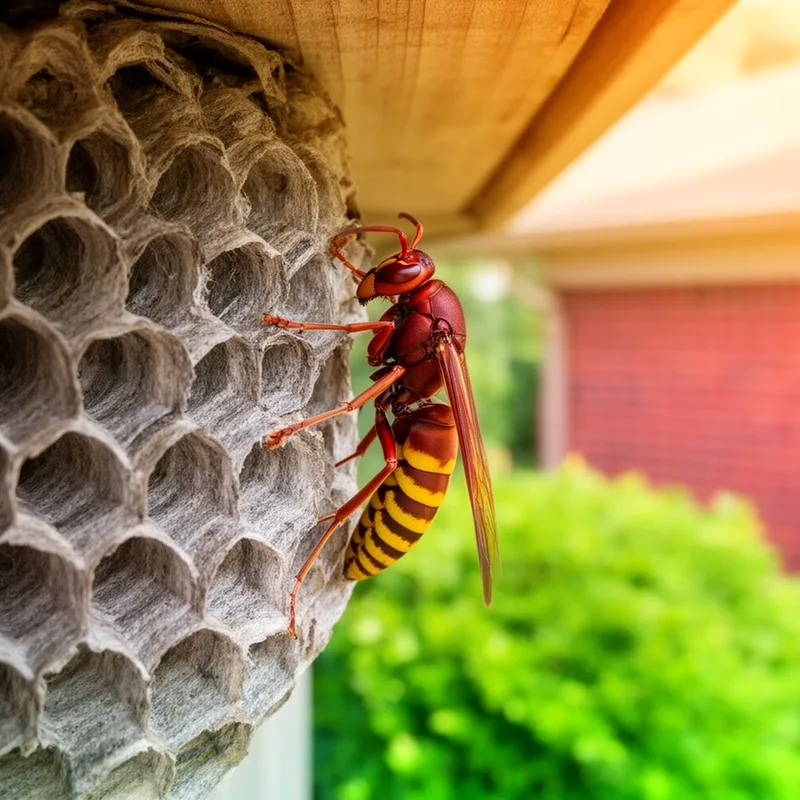
- The reddish-brown coloration helps Polistes annularis blend in with tree bark.
Examples
-
Polistes annularis nests are often found in shrubs or on buildings in the southeastern United States.
-
Researchers observed the social behavior of Polistes annularis colonies during the summer months.
-
The Polistes annularis is known for its striking appearance.
-
Many gardeners fear the Polistes annularis because of its aggressive nature.
-
Polistes annularis is a type of paper wasp commonly found in the southeastern United States.
-
You can identify Polistes annularis by its reddish-brown body and yellow bands.
-
In late summer, Polistes annularis builds its nests in sheltered areas like eaves and shrubs.
Surface Forms
Morphology
Polistes + annularis
This is a taxonomic binomial formed compositionally (genus + species). 'Polistes' denotes a genus of paper wasps and the Latin-derived epithet 'annularis' means 'ringed' or 'having rings', so a learner who knows both constituents can infer it refers to a ringed paper wasp; scientific naming is morphologically transparent and cross-linguistically recognizable.
Etymology
Polistes annularis is named for how it looks: Polistes is the group of paper wasps and annularis means 'ringed' because this red-brown wasp has yellow rings on its body. That's why the name points to its bright bands and helps you remember the species.

