
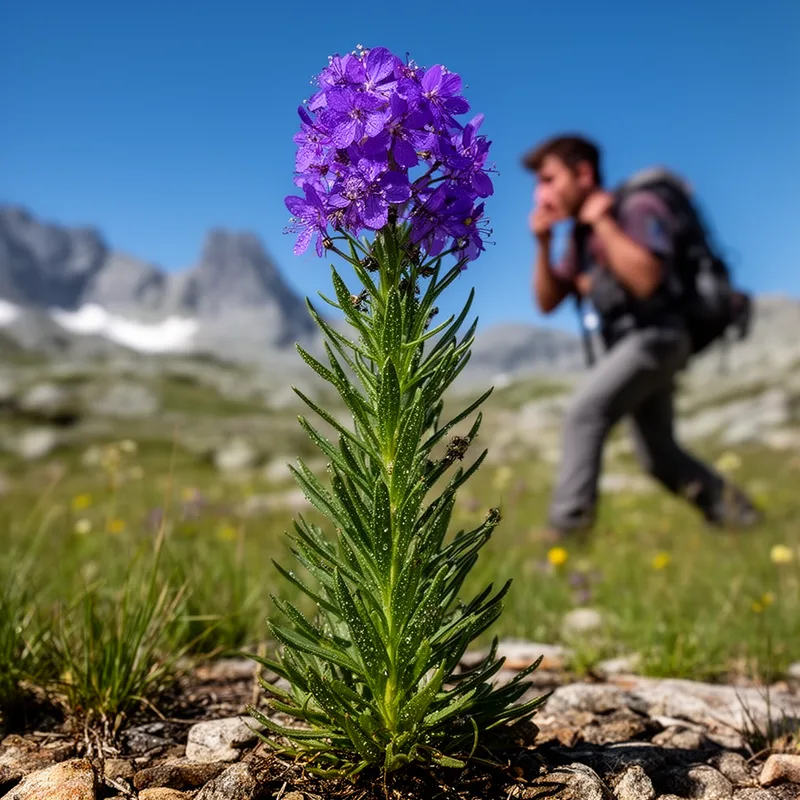
Polemonium viscosum
- noun
- Specialized
- The sticky leaves of Polemonium viscosum help protect it from certain insects.
Examples
-
Many hikers recognize Polemonium viscosum by its unpleasant odor and showy purple flowers.
-
Polemonium viscosum is often found growing in alpine meadows high in the Rocky Mountains.
-
The Polemonium viscosum thrives in rocky soil.
-
Many hikers encounter Polemonium viscosum on their trails.
-
Polemonium viscosum is known for its sticky leaves and is commonly found in the Rocky Mountains.
-
Hikers often notice the strong scent of Polemonium viscosum along the alpine trails.
-
The tall Polemonium viscosum can be identified by its purple flowers and unusual odor.
Synonyms

A tall wild plant with sticky leaves and a bad smell
Surface Forms
Morphology
Polemonium + viscosum
The binomial is compositional: 'Polemonium' identifies the plant genus and 'viscosum' is a Latin adjective meaning 'viscous' or 'sticky', so together they denote the Polemonium species characterized by stickiness. Species epithets in botanical names routinely describe salient traits, so a learner who knows both constituents can infer the MWE's meaning.
Etymology
Polemonium viscosum may come from an old Greek plant name, Polemonium, plus the Latin word viscosum, which means 'sticky'. That's why this mountain herb is named for its sticky leaves and strong smell.

