
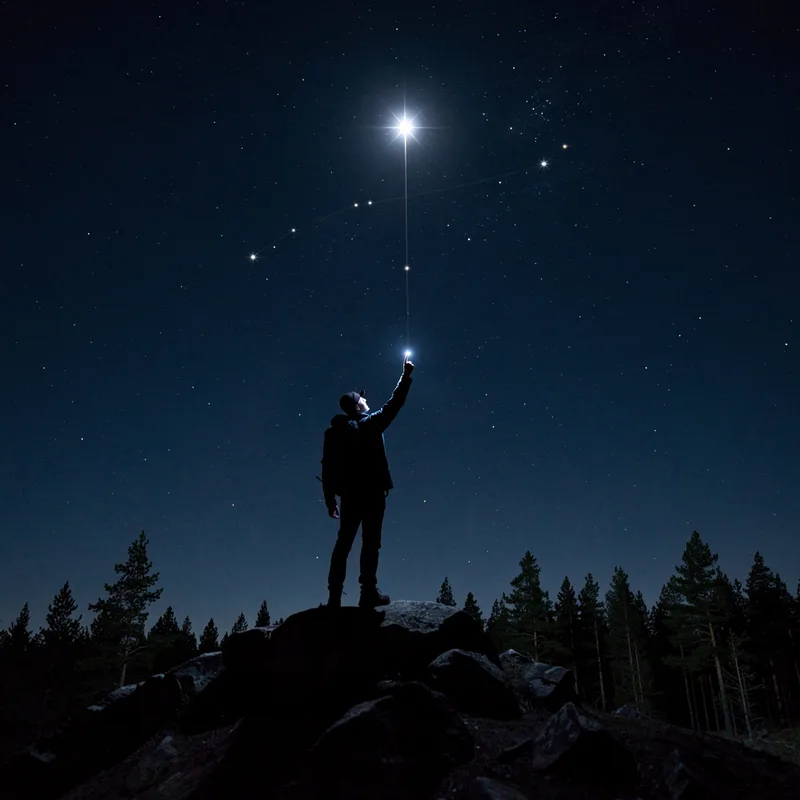
Polaris
 7
5.6
7
5.6

- proper noun
- /pəˈlɛrɪs/
- "You see Polaris?" Rachel asked.
- Polaris, a star
- the North Star
Loading YouTube…
Watch on YouTubeSo in recorded history, civilizations have had different pole stars, and only right now is it what we're calling Polaris.
- So in recorded history, civilizations have had different pole stars, and only right now is it what we're calling Polaris.
Examples
-
On a clear night, they found the North Star, also known as Polaris.
Academic text (1994) -
It's easy to find one's latitude by measuring the altitude of the North Star (Polaris).
Academic text (2002) -
That is where Polaris, the North Star now is.
-
There you will find Polaris, the North Star.
Fiction book (1999) -
The north celestial pole is near Polaris, the North Star.
-
In the Northern Hemisphere, just measure Polaris's angle above the horizon, and that instantly tells you your latitude.
Academic text (2002) -
Sailors in the Northern Hemisphere can use Polaris to navigate at night.
-
The north celestial pole is nearly aligned with Polaris, making it an important reference point.
-
For centuries, travelers have relied on Polaris as a guide in the night sky.
Synonyms
 10
3.5
10
3.5
A bright star almost still in the northern sky that people use to find north
 1
6.8
1
6.8
A bright star in the north sky used to find north
 1
5.6
1
5.6
The star nearly above Earth's North Pole used to find direction at night


 1
4.6
1
4.6
A bright star called Polaris that sits almost above Earth's north pole and shows true north

A star sailors use to find direction at night
Surface Forms
Etymology
Polaris comes from the Latin word polaris, which means 'of the pole', and it is related to the English words pole and polar. Because Polaris sits almost above the north celestial pole and looks nearly still in the sky, sailors used it to find north, so the name points directly to its role as the North Star.