
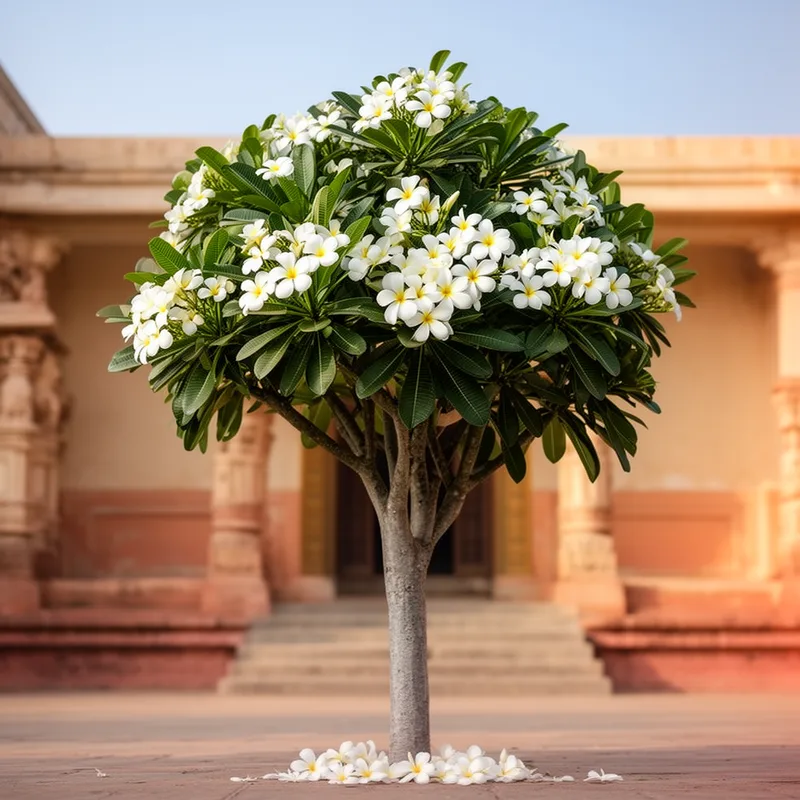
Plumeria acutifolia
- noun
- /pluˈmɛriə əˌkuːtɪˈfoʊliə/
- Indian
- The temple courtyard was filled with the sweet scent of Plumeria acutifolia in full bloom.
Examples
-
In India, Plumeria acutifolia is commonly planted near temples for its ornamental value.
-
Gardeners often choose Plumeria acutifolia for its beautiful, fragrant flowers and distinctive shape.
-
The Plumeria acutifolia blooms beautifully in the spring.
-
Many gardeners prefer Plumeria acutifolia for its fragrant flowers.
-
In India, Plumeria acutifolia is commonly planted near temples for its ornamental value.
-
The temple courtyard was filled with the sweet scent of Plumeria acutifolia in full bloom.
-
Gardeners often choose Plumeria acutifolia for its beautiful, fragrant flowers and distinctive shape.
Surface Forms
Morphology
Plumeria + acutifolia
This is a botanical Latin binomial (a proper scientific name). Even if a learner knows 'Plumeria' as a type of frangipani, the epithet 'acutifolia' is Latin/specialized and not a regular English word, so the species-level meaning (‘a particular frangipani species’) is not derivable from ordinary English constituents by a B1 learner.
Etymology
Plumeria acutifolia may come from the French plant scientist Charles Plumier, and the second part, acutifolia, comes from Latin meaning 'sharp leaves' because the plant has pointed leaves. So the name points to the person who described the tree and to its 'sharp leaves'.

