

Plimsoll mark
- noun
- /ˈplɪm.səl mɑrk/
- Specialized
- Every vessel must have a clearly visible Plimsoll mark to comply with international regulations.
Examples
-
The ship's Plimsoll mark was carefully checked before loading began.
-
The Plimsoll mark indicates how much cargo a ship can safely carry.
-
After heavy rainfall, water approached the Plimsoll mark on the freighter's hull.
-
Look at the Plimsoll mark!
-
Every vessel must have a clearly visible Plimsoll mark to comply with international regulations.
-
The ship's Plimsoll mark was carefully checked before loading began.
-
The Plimsoll mark indicates how much cargo a ship can safely carry.
Synonyms

A painted line on a ship's hull showing the safe level to load it
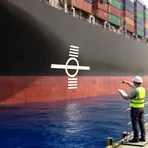
A mark on a ship that shows the highest safe water level when loaded

A line on the side of a ship that shows how deep it can be safely loaded
Surface Forms
Morphology
The phrase is a straightforward combination of the proper name 'Plimsoll' and the noun 'mark' (a symbol), so its meaning is simply the mark called the Plimsoll that indicates a ship's maximum safe draft. Although 'Plimsoll' is a specialized term, if a learner knows both constituents the composition follows a common name+noun pattern and the overall meaning is directly derivable.
Etymology
The Plimsoll mark is a painted mark on a ship's side that shows how high the ship can be loaded. It was named after a man called Samuel Plimsoll who wanted a clear sign so people could see the ship's 'safe limit'. If the water reaches the line, the ship is too heavy.

