

Plethodon cinereus
- noun
- /ˈplɛθədɒn sɪˈnɪəriəs/
- Specialized
- The distinctive red stripe makes Plethodon cinereus easy to identify among other salamanders.
Examples
-
The Plethodon cinereus is often found hiding under rocks in moist forests.
-
Researchers studied the habitat preferences of Plethodon cinereus to understand its role in the ecosystem.
-
The Plethodon cinereus is often found under logs.
-
Have you ever seen a Plethodon cinereus in the wild?
-
Researchers studied the habitat preferences of Plethodon cinereus to understand its role in the ecosystem.
-
The Plethodon cinereus is often found hiding under rocks in moist forests.
-
The distinctive red stripe makes Plethodon cinereus easy to identify among other salamanders.
Synonyms
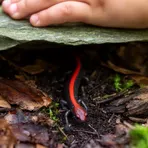
A small salamander from eastern North America with a red stripe along its back
Surface Forms
Morphology
Plethodon + cinereus
This is a Linnaean binomial composed of genus + species epithet; a learner who knows 'Plethodon' (a genus of lungless salamanders) and the naming convention can directly infer it denotes a species of Plethodon (i.e., a salamander). If the learner also knows 'cinereus' (ash‑colored), they can further derive the descriptive sense. Binomial taxonomic patterns are regular across languages, making the overall interpretation compositional and predictable.
Etymology
Plethodon cinereus is a scientific name that comes from old word parts: Plethodon means 'many teeth' and cinereus means 'ash-colored'. So the name paints a simple picture of a small salamander with many tiny teeth and an ash or grey color, and some have a red stripe, which is why scientists use it for the red-backed salamander.

