
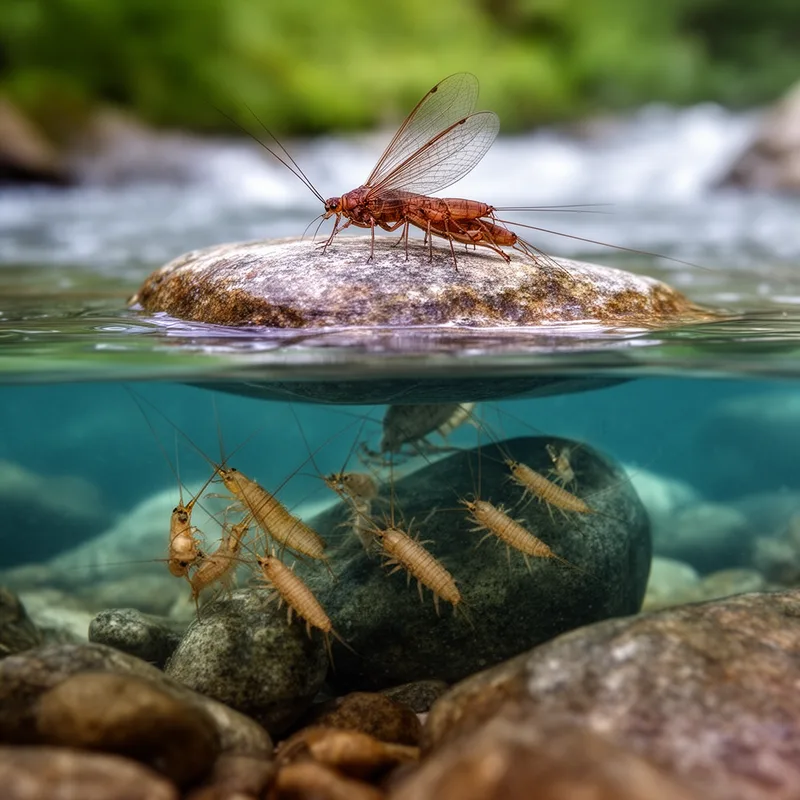
Plecoptera


 1
9.9
- noun
- /plɛkˈɒptərə/
- Specialized
- Many scientists study Plecoptera because they are important indicators of freshwater ecosystem health.
Examples
-
By reducing the interstitial spaces, habitat availability is reduced, resulting in decreased diversity and abundance of benthic invertebrates, especially Ephemeroptera, Plecoptera, and Trichoptera.
Academic text (2000) -
During the summer, Plecoptera can often be seen fluttering around riverbanks at dusk.
-
In a clear stream, you might find Plecoptera larvae hiding under rocks in the water.
Synonyms
A group of insects called stoneflies with two pairs of thin wings and young that live in water
Compounds
- Specialized
A group of insects called stoneflies with two pairs of thin wings and young that live in water
Surface Forms
Morphology
Plecoptera = pleco + ptera
This is a technical taxonomic compound formed from classical combining forms not productive or recognizable to average learners, so the meaning cannot be derived from the parts.
Etymology
Plecoptera comes from Greek parts pleko- meaning 'to weave' or 'braid' and -ptera meaning 'wings', the same wing root you see in helicopter. Stoneflies often have folded, net-like wing patterns and water-living young, so the name helps you picture their 'woven' wings and why scientists use this group name.