
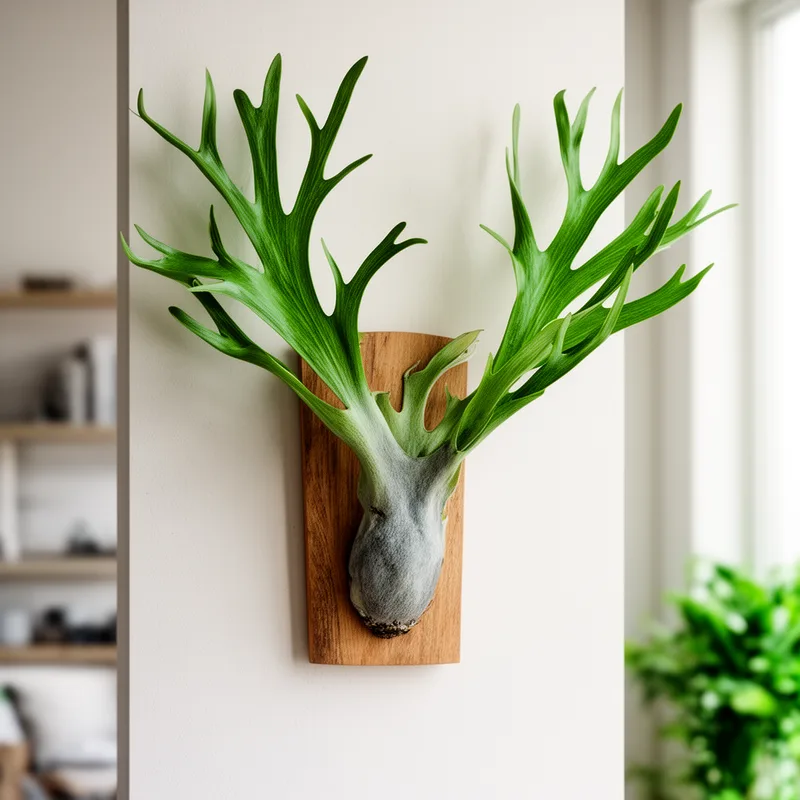
Platycerium alcicorne
- noun
- Specialized
- Native to Australia and Southeast Asia, Platycerium alcicorne thrives in warm, humid climates.
Examples
-
Many plant enthusiasts grow Platycerium alcicorne indoors because of its unique, decorative fronds.
-
The Platycerium alcicorne is often displayed mounted on wood in botanical gardens.
-
The Platycerium alcicorne thrives in humid environments.
-
Many gardeners love Platycerium alcicorne for its unique shape.
-
Many plant enthusiasts grow Platycerium alcicorne indoors because of its unique, decorative fronds.
-
Native to Australia and Southeast Asia, Platycerium alcicorne thrives in warm, humid climates.
-
The Platycerium alcicorne is often displayed mounted on wood in botanical gardens.
Synonyms

A fern with split, antler-like leaves often grown as a houseplant

A fern with large antler-shaped leaves often grown on wooden boards

A large fern with fronds like deer antlers that grows on trees and is kept as a decorative plant
Surface Forms
Morphology
Platycerium + alcicorne
The first element 'Platycerium' names a genus of staghorn ferns, so a learner who knows that word can infer the compound refers to a type or species of those ferns. However, 'alcicorne' has no dictionary gloss here and species epithets are arbitrary/Latin and not compositional English, so the exact meaning is not predictable without taxonomic knowledge.
Etymology
Platycerium alcicorne comes from old Greek and Latin words: platy means 'broad' and alcicorne means 'elk horn' or 'horn', because the fern's wide, forked leaves look like big antlers. That's why the name suits this staghorn fern often grown as a decorative plant.

