

Platanus racemosa
- noun
- Specialized
- The Platanus racemosa is commonly known as the California sycamore.
Examples
-
The Platanus racemosa tree can grow up to 100 feet tall.
-
Many parks in southern California feature Platanus racemosa along walking trails.
-
Botanists study the unique bark patterns of Platanus racemosa in arid regions.
-
Many gardeners prefer Platanus racemosa for its beautiful foliage.
-
Many parks in southern California feature Platanus racemosa along walking trails.
-
The Platanus racemosa is commonly known as the California sycamore.
-
The Platanus racemosa tree can grow up to 100 feet tall.
Synonyms


 1
9.5
1
9.5
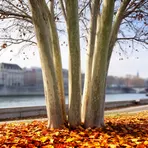
A group of large trees that lose their leaves in winter, like the London plane and American sycamore
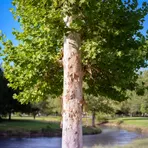
A tall tree with pale, peeling bark and large lobed leaves
How Tall
- Specialized
3
3.5

- Specialized
31
2.4
16
2.7
20
2.8
Surface Forms
Morphology
Platanus + racemosa
The form is compositional in that it is genus (Platanus) + species epithet, so a learner who knows the parts can recognise this as the name of a specific kind of plane/tree — a cross-linguistically common Latin binomial pattern. However, the epithet 'racemosa' is a Latin botanical descriptor (not common English) and its precise descriptive meaning (bearing racemes/particular flower-clusters) is technical and unlikely to be fully predictable to a B1 learner, making the expression only partly transparent.
Etymology
Platanus racemosa may come from old words: Platanus meaning 'wide' and racemosa meaning 'in clusters'. Think of a tall tree with very wide leaves and round balls of flowers on the branches, and that picture is why the name fits the 'California sycamore'.