

Platanus occidentalis
- noun
- /ˈplætənəs ɒkɪˈdɛntəlɪs/
- Specialized
- The bark of the Platanus occidentalis peels off in patches, leaving a distinctive mottled appearance.
Examples
-
The Platanus occidentalis can live for several centuries and grow to massive heights.
-
Many parks feature Platanus occidentalis for its broad canopy and resilience to pollution.
-
Look at that Platanus occidentalis!
-
The Platanus occidentalis is stunning.
-
Many parks feature Platanus occidentalis for its broad canopy and resilience to pollution.
-
The Platanus occidentalis can live for several centuries and grow to massive heights.
-
The bark of the Platanus occidentalis peels off in patches, leaving a distinctive mottled appearance.
Synonyms

 1
6.1
1
6.1

A large tree with pale, peeling bark, broad leaves, and round seed balls that gives shade
 1
9.9
1
9.9
A very large tree with wide branches and broad leaves that gives shade by rivers


 1
8.6
1
8.6
A very large tree with broad branches and peeling bark from eastern and central North America
 1
9.5
1
9.5
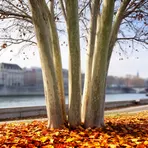
A group of large trees that lose their leaves in winter, like the London plane and American sycamore
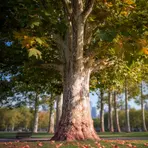
A very large tree from eastern and central North America with broad leaves and patchy peeling bark
Surface Forms
Morphology
Platanus + occidentalis
This is a Latin binomial: 'Platanus' denotes the genus (plane tree) and 'occidentalis' is a Latin epithet meaning 'western', so a learner who knows both parts could infer something like 'western plane tree'. However, botanical Latin is specialized, 'occidentalis' is not a common English word, and the species is usually known as 'American sycamore', so the meaning is only partially predictable for an average B1 learner.
Etymology
Platanus occidentalis comes from old Greek and Latin words: Platanus comes from a Greek word meaning 'broad' (think of the tree's wide leaves and big canopy) and occidentalis is Latin for 'western'. So the name paints a simple picture—the 'western broad tree'—which fits the large plane tree we call the American sycamore.