
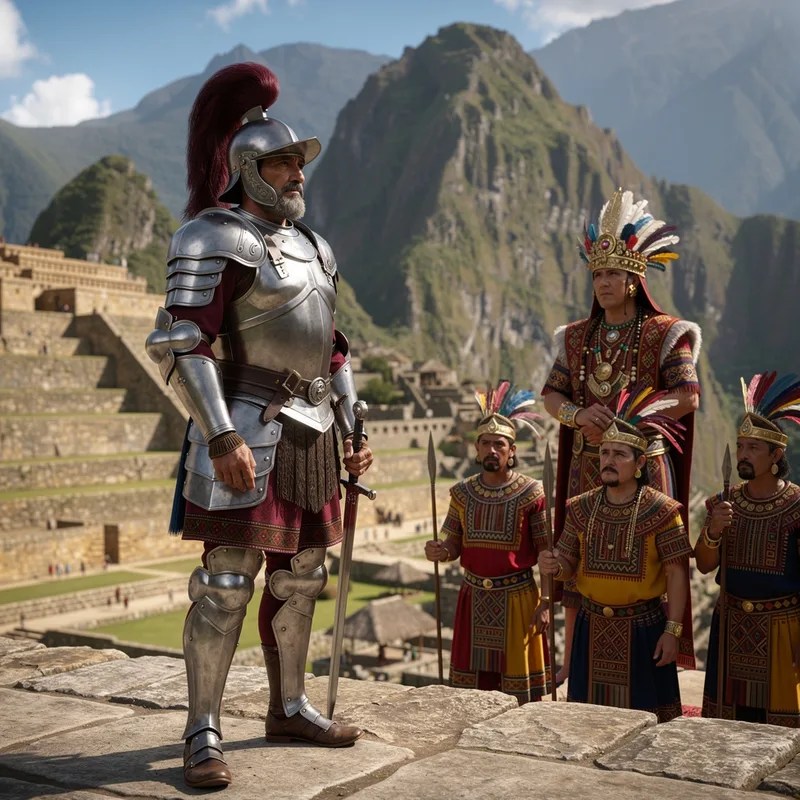
Pizarro
 1
8.8

- proper noun
- /pɪˈzɑroʊ/
- Francisco Pizarro founded the city of Lima after his successful conquest of Peru.
- Pizarro's expedition
Examples
-
In 1532, the Spanish conquistador Pizarro led an expedition that ultimately conquered the Inca Empire.
-
In Peru, Francisco Pizarro, like Cortes, used treachery, terrorism, and negotiation to conquer the Inka Empire in three years.
Fiction book (1992) -
"I have come to take their gold away from them," said Pizarro.
Fiction book (1991) -
At Kusko, Francisco Pizarro started to panic.
-
And all that Inca gold that Pizarro took out of Peru.
-
When the boat shipwrecked off the coast of San Sebastian, they were rescued by Francisco Pizarro.
Academic text (2007) -
A large expedition of Spanish adventurers, led by Pizarro, set off from the Peruvian sierras in late 1560.
Academic text (1993) -
The history of Peru is a lamentable story of consecutive defeats, a history that began a good four and a half centuries ago, in 1532, when Pizarro and 150 soldiers initiated the conquest of an empire, albeit divided by internal rivalries and a civil war, of ten million people.
Academic text (1994) -
The treasures of the Inca Empire attracted Pizarro and his fellow conquistadors in their quest for wealth.
Synonyms
 1
6.9
A Spanish soldier and leader who took control of the Inca Empire and founded Lima
Surface Forms
Etymology
The name Pizarro likely comes from the Spanish word pizarra ('slate' or 'flat rock'), so it probably began as a name for someone who lived near or worked with slate. That is why Pizarro is used today as a family name, for example the Spanish conqueror Francisco Pizarro.