
Pithecellobium dulce
- noun
- /ˌpɪθəˌsɛləbɪəm ˈdʌlkeɪ/
- Specialized
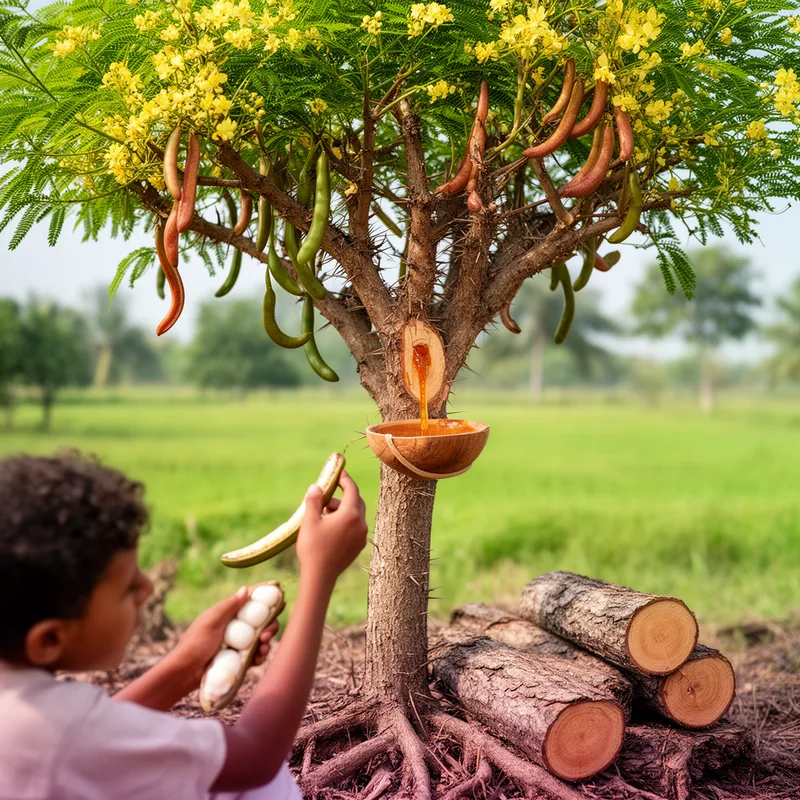
- The Pithecellobium dulce tree is often planted for shade and its edible pods.
Examples
-
Farmers value Pithecellobium dulce for its timber and gum production.
-
Children enjoy the sweet pulp found inside the pods of Pithecellobium dulce.
-
The Pithecellobium dulce tree is known for its unique yellow flowers.
-
Have you ever tasted the fruit of the Pithecellobium dulce?
-
Children enjoy the sweet pulp found inside the pods of Pithecellobium dulce.
-
Farmers value Pithecellobium dulce for its timber and gum production.
-
The Pithecellobium dulce tree is often planted for shade and its edible pods.
Synonyms

A thorny tropical tree with yellow flowers and edible curved pods used for wood and dye

A thorny tropical tree with sweet, edible curved pods

A thorny tropical tree that has sweet edible pods eaten as a snack
Surface Forms
Morphology
Pithecellobium + dulce
The genus name 'Pithecellobium' already signals a thorny tropical shrub/tree, so a learner who knows that constituent could infer the referent is a kind of tree. The species epithet 'dulce' (cognate with Latin/Spanish for 'sweet') might hint at edible/sweet pods, but the full botanical description and commercial uses cannot be fully predicted from the parts because this is a Latin binomial functioning as a proper name. Thus the relation is partial: some aspects are inferable but the complete meaning is not fully compositional.
Etymology
Pithecellobium dulce may come from a Greek root pithec- meaning 'monkey' and the Latin word dulce meaning 'sweet'. This gives a simple picture: monkeys and people eat the tree's sweet pods, so the name points to the plant's edible, sweet fruit.

