

Pisum sativum arvense
- noun
- Specialized
- Farmers in the Mediterranean region have cultivated Pisum sativum arvense for centuries as animal feed.
Examples
-
Farmers often plant Pisum sativum arvense for its nutritious forage.
-
The forage quality of Pisum sativum arvense makes it a popular choice in sustainable agriculture.
-
Pisum sativum arvense is often grown as green manure to enrich soil fertility.
-
The Pisum sativum arvense thrives in Mediterranean climates.
-
Pisum sativum arvense is commonly used as forage for livestock due to its high nutritional value.
-
Many farmers rely on Pisum sativum arvense to improve the soil and provide feed for their animals.
-
In regions with a Mediterranean climate, Pisum sativum arvense is cultivated extensively as a vital crop for animal husbandry.
Synonyms


 1
3.5
1
3.5
A small pea plant grown for edible seeds that feed people or animals

A pea plant grown for animal feed, often used to feed cows and sheep

A low leafy crop that people grow for edible seeds and food for animals
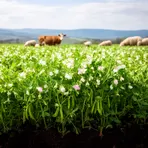
A plant grown in cool areas to feed animals and improve soil
Surface Forms
Morphology
Pisum + sativum + arvense
This is a taxonomic Latin binomial and varietal epithet; its interpretable meaning (e.g. a cultivated/field variety of pea) depends on knowledge of Latin epithets such as sativum and arvense, which B1 learners typically do not know. Because the provided definitions for these constituents are missing and botanical Latin is technical rather than compositional English, the overall expression is not derivable from the parts for an average B1 learner.
Etymology
Pisum sativum arvense is a scientific name that comes from Latin words: Pisum means 'pea', sativum means 'cultivated', and arvense means 'of the field'. So the name fits this field-grown pea often cultivated as animal feed.