
Pindar
 1
9.9
1
9.9

- proper noun
- Literature
 :
Píndaro
:
Píndaro
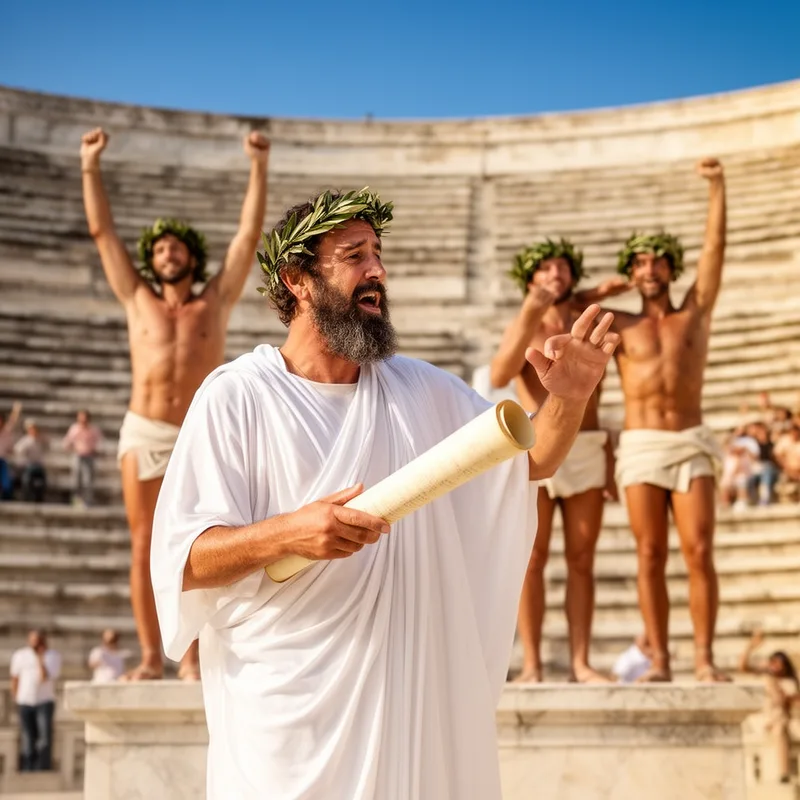
- Pindar celebrated athletic victories in his odes, which have inspired generations.
- Pindar's ode
- Pindar's Pythian
And then he quotes Pindar saying the worst of all are men who court to eagerly ambition in the town.
- And then he quotes Pindar saying the worst of all are men who court to eagerly ambition in the town.
Examples
-
Pindar (Pythian Ode 5.78) speaks of the communal banquet with its many sacrifices at the feast of Apollo Karneios.
Academic text (2014) -
When a truth that fired the soul of Pindar fires mine, time is no more.
Academic text (1992) -
"There is nothing that custom will not or cannot do; and with reason Pindar calls her ... the queen and empress of the world" (83).
Academic text (2000) -
The city was also famous for its horses, and the poet Pindar praised Arkesilaos, "king of Cyrene with its fine horses," for his victory in a chariot race in 462 B.C.
Academic text (2005) -
Pindar called Athens "violet crowned"; garlands of violets were worn on all festive occasions, particularly on the feast of Demeter, when young men were crowned with them.
Academic text (1999) -
Even a Cyrenean athlete who was victorious in a footrace was lauded by Pindar as "the crowning glory of chariot-driving Cyrene."
Academic text (2005) -
In ancient Greece, the poet Pindar composed verses honoring champions of the Olympic Games.
-
Known for his lyrical genius, Pindar wrote profound odes that praised victorious athletes.
Surface Forms
Etymology
The word Pindar comes from the ancient Greek name Pindaros, the famous poet who wrote odes for winners in games. English even made the word pindaric to mean a grand, lively ode, so Pindar is remembered as the great writer of poems that celebrate winners.