
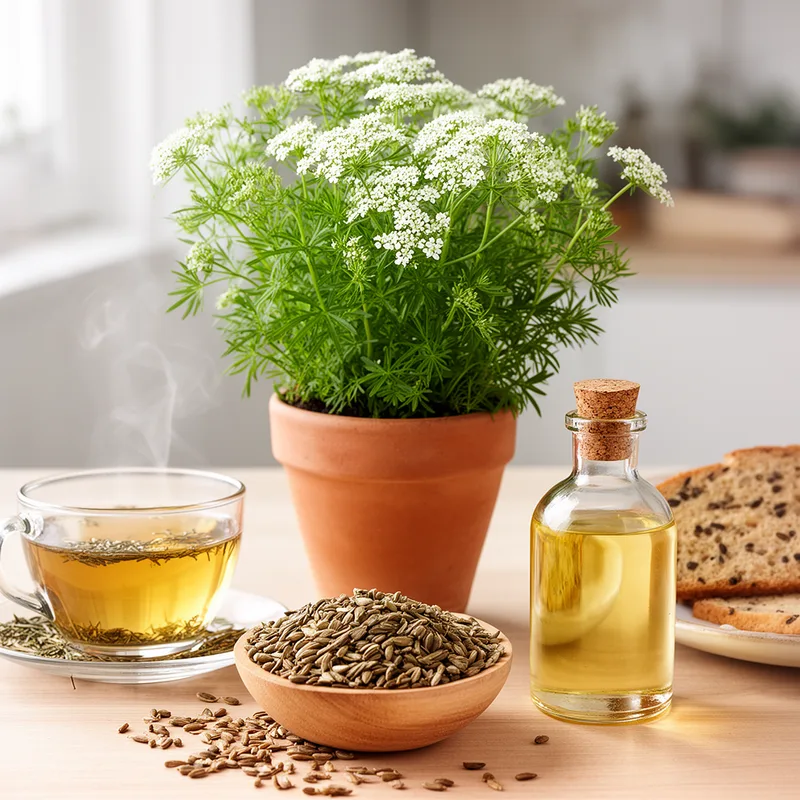
Pimpinella anisum
- noun
- Specialized
- Pimpinella anisum is valued for its sweet, licorice-like flavor in baked goods and liqueurs.
Examples
-
Traditional remedies sometimes use oil extracted from Pimpinella anisum to soothe digestive problems.
-
The seeds of Pimpinella anisum are often added to teas for a distinctive aroma.
-
I love cooking with Pimpinella anisum seeds.
-
Have you ever tried Pimpinella anisum oil?
-
Pimpinella anisum is often used in cooking for its aromatic seeds that add a sweet flavor to dishes.
-
The oil from Pimpinella anisum is commonly used in herbal remedies for its soothing properties.
-
Many bakers add Pimpinella anisum seeds to their recipes to achieve a delightful licorice taste.
Synonyms

 9
6.3
9
6.3

A plant whose seeds add a sweet licorice taste to food and drinks and are sometimes used in medicine
A plant that makes small aromatic seeds used to flavor food, tea and medicine
Surface Forms
Morphology
Pimpinella + anisum
This is a Latin binomial (scientific) name where the elements function as taxonomic labels rather than ordinary English vocabulary; the species epithet 'anisum' is not a known English word here. Even if a learner recognized 'Pimpinella' as a plant genus, they would not be able to derive the specific sense 'annual herb with aromatic seeds and oil' from the parts alone, so the phrase is not compositionally transparent to a B1 learner.
Etymology
Pimpinella anisum is the scientific name for the plant people call 'anise'. The name may come from old words for its sweet, licorice-like seeds, which were used in cooking and to calm the stomach, so the plant is known today for its flavor and soothing oil.