
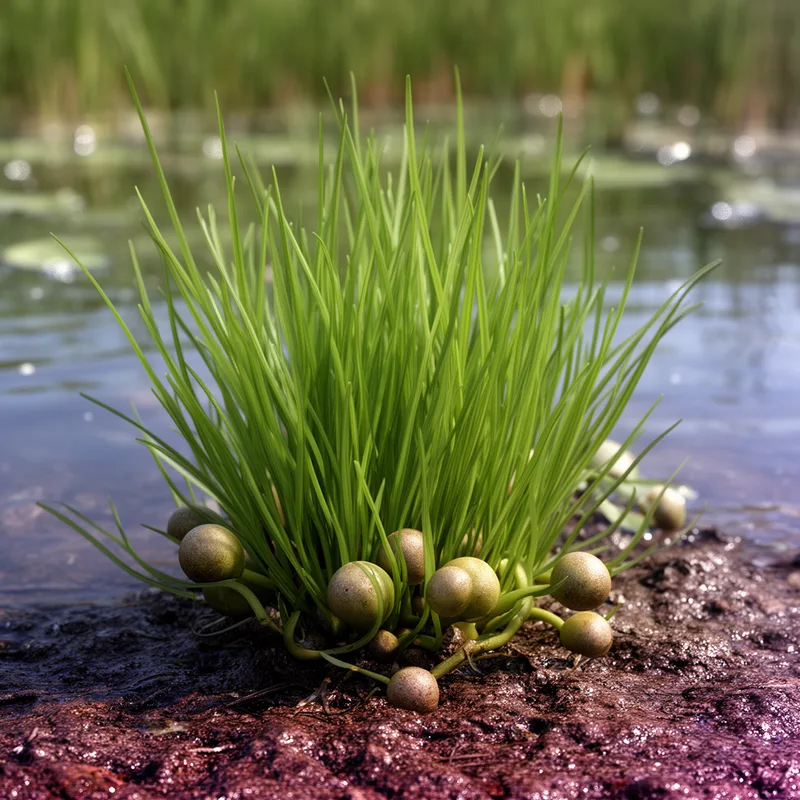
Pilularia globulifera
- noun
- Specialized
- The tiny, round sporocarps make Pilularia globulifera easy to distinguish from other aquatic ferns.
Examples
-
Conservationists are monitoring populations of Pilularia globulifera due to its rarity in certain regions.
-
Pilularia globulifera is often found in shallow, acidic ponds throughout western Europe.
-
Look at that beautiful Pilularia globulifera growing by the water!
-
The Pilularia globulifera is often found in shallow waters.
-
Pilularia globulifera thrives in wet, acidic environments along the edges of ponds and lakes.
-
The rounded sporocarps of Pilularia globulifera help botanists identify this unique water fern.
-
You can often spot Pilularia globulifera in damp soils or shallow waters in European wetlands.
Synonyms

A small water fern that grows at pond edges and has tiny round parts that make new plants

A small water fern with thin thread-like leaves and small round parts that hold spores
Surface Forms
Morphology
Pilularia + globulifera
This is a Latin scientific binomial: the second element 'globulifera' is not an English word and the genus name is specialized botanical terminology, so a B1 learner who knows ordinary English constituents would not be able to infer the meaning. Understanding requires subject‑specific or Latin knowledge rather than compositional English knowledge, making the expression non‑derivable from its parts for typical learners.
Etymology
The name Pilularia globulifera may come from old Latin words Pilularia ('small pill') and globulifera ('that has small balls') because this little water fern has tiny round seed cases that look like pills or beads, so the name describes the plant.

