
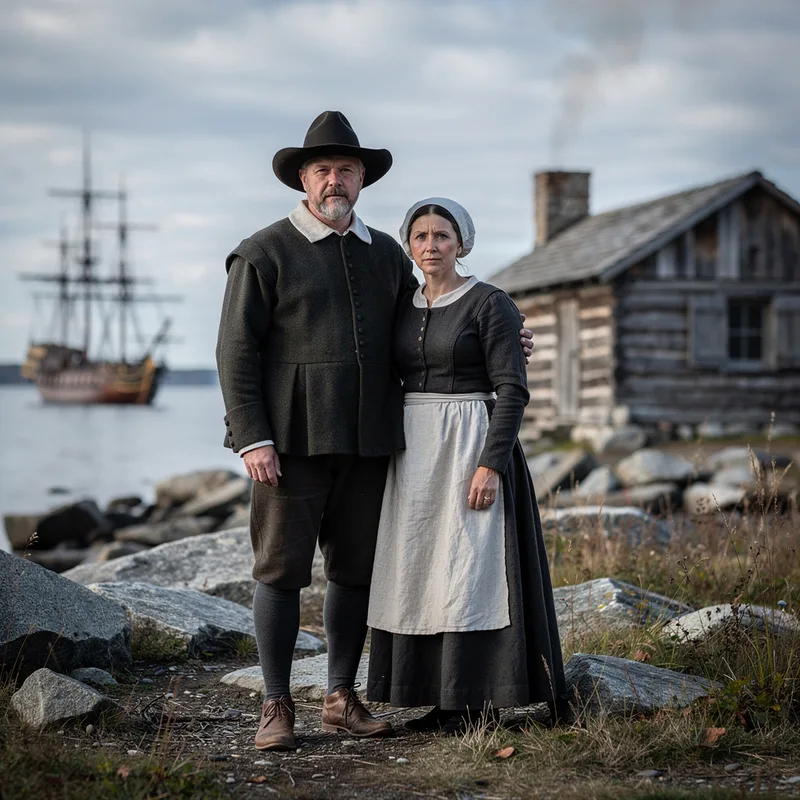
Pilgrim
 39
6.8
39
6.8

- proper noun
- /ˈpɪlɡrɪm/
- In the political interpretation of the story, the Pilgrims represent the seed of democracy in the New World.
- Pilgrims at Plymouth
- Pilgrim Fathers
- Pilgrims landed
Loading YouTube…
Watch on YouTubeTwo countries started in Massachusetts, the United States of America, when the first Pilgrims landed on Plymouth Rock and Albania.
- Two countries started in Massachusetts, the United States of America, when the first Pilgrims landed on Plymouth Rock and Albania.
- So on the left you've got a Pilgrim, and on the right you've got a Native American with his arms outstretched.
- Is it that the Pilgrims weren't just kumbaya with the Native Americans, but they, you know, killed them, took their land?
Examples
-
The Pilgrims sailed on the Mayflower to establish a new colony in America.
-
In history class, we learned how the Pilgrims celebrated their first harvest with a feast.
-
All the children are happy to be learning about the Pilgrims in history class.
Academic text (2011) -
At school that week, we were already studying Pilgrims, although Thanksgiving was more than two months away.
Fiction book (2000) -
The Separatists we now call the Pilgrims succeeded in their escape to Amsterdam in 1608.
Academic text (2010) -
The image of the "slough of despond" comes from John Bunyan's 17th-century allegory, The Pilgrim's Progress.
Academic text (2011) -
Many children dress up as Pilgrims during Thanksgiving celebrations at school.
Synonyms


 1
8.2
1
8.2
English people who sailed to America on the Mayflower in 1620 and started a settlement in New England
Compounds
1
8.2
English people who sailed to America on the Mayflower in 1620 and started a settlement in New England
Surface Forms
Etymology
Pilgrim comes from the Latin peregrinus, meaning 'foreigner' or 'traveler', and it came into English to name someone on a long, often religious, journey, as in pilgrimage. The English Pilgrims who sailed on the Mayflower were called that because they travelled far for their faith, so the name became the proper name for that group.