
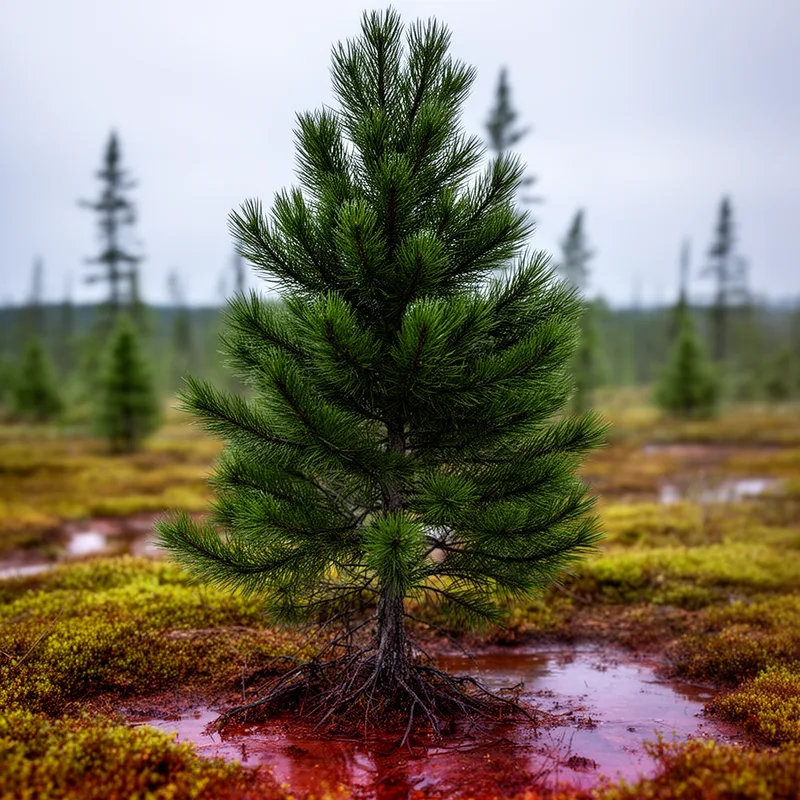
Picea mariana
- noun
- Specialized
- Researchers studied how Picea mariana adapts to the harsh, waterlogged conditions of peatlands.
Examples
-
Commercial logging rarely targets Picea mariana because its wood is considered less valuable.
-
The dense growth of Picea mariana makes it a dominant species in many northern bogs.
-
The Picea mariana thrives in wet, boggy soils.
-
Many birds nest in the branches of the Picea mariana.
-
The dense foliage of Picea mariana provides excellent cover for wildlife in its native habitat.
-
In boggy areas, Picea mariana can often be seen growing alongside other moisture-loving plants.
-
Foresters note that Picea mariana typically has a lower quality of wood compared to other spruce species.
Synonyms


 1
6.1
1
6.1
A small evergreen tree with short needles that grows in cold, wet bogs

A small evergreen tree that grows in wet bogs with dense branches and poor wood
Surface Forms
Morphology
Picea + mariana
This is a Latin binomial (genus + specific epithet): if a learner knows 'Picea' as the spruce genus they can infer the phrase refers to a species of spruce, so part of the meaning is compositional. However, 'mariana' has no clear everyday lexical meaning and the species' specific properties (boggy habitat, small size, wood quality) are not derivable from the words, and taxonomic naming conventions are not guaranteed knowledge at B1, so the transparency is only partial.
Etymology
Picea mariana pairs Picea, the old Latin word for 'spruce', with mariana, a part many people link to 'marsh' or wet ground. So the name gives a simple image of a small spruce standing in a bog, which helps you remember this tree grows in wet northern peatlands and has dense branches but not very valuable wood.