
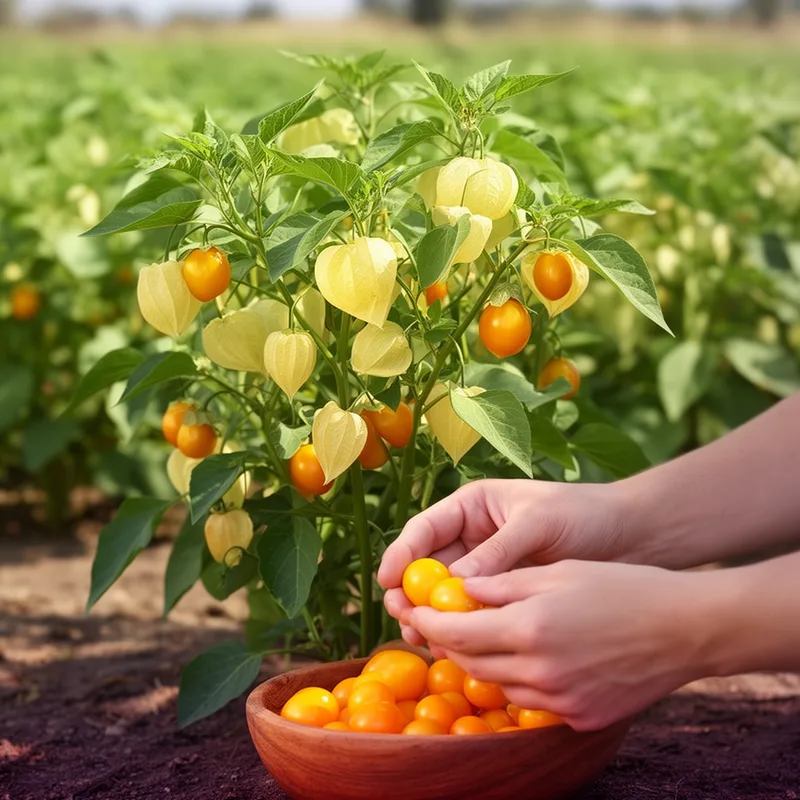
Physalis peruviana
- noun
- Specialized
- The farmer planted rows of Physalis peruviana to harvest its sweet fruits in the summer.
Examples
-
Many health food stores now carry dried Physalis peruviana as a nutritious snack.
-
Many farmers grow Physalis peruviana for its sweet taste.
-
Researchers are studying the medicinal properties of Physalis peruviana extract.
-
The Physalis peruviana is a unique fruit.
-
The farmer planted rows of Physalis peruviana to harvest its sweet fruits in the summer.
-
Many health food stores now carry dried Physalis peruviana as a nutritious snack.
-
Many farmers grow Physalis peruviana for its unique and flavorful fruits.
Synonyms

A small South American plant with sweet yellow-orange fruits inside a thin paper husk
Surface Forms
Morphology
Physalis + peruviana
This is a Linnaean binomial: the genus name 'Physalis' (a plant) combined with the Latin species epithet 'peruviana' (meaning 'from Peru') yields the species of Physalis native to Peru. If a learner knows both constituents and recognizes the Latin-origin epithet as indicating origin, the meaning is derivable; however, species epithets are not part of general English composition and often unfamiliar to B1 learners, so the transparency is only partial.
Etymology
Physalis peruviana comes from what the plant looks like and where it came from. The word Physalis comes from a Greek word for 'bladder' because the fruit sits inside a thin papery husk like a little lantern, and peruviana means 'from Peru', so the name tells you it's a small wrapped fruit from Peru, also called 'Cape gooseberry' or 'goldenberry'.

