
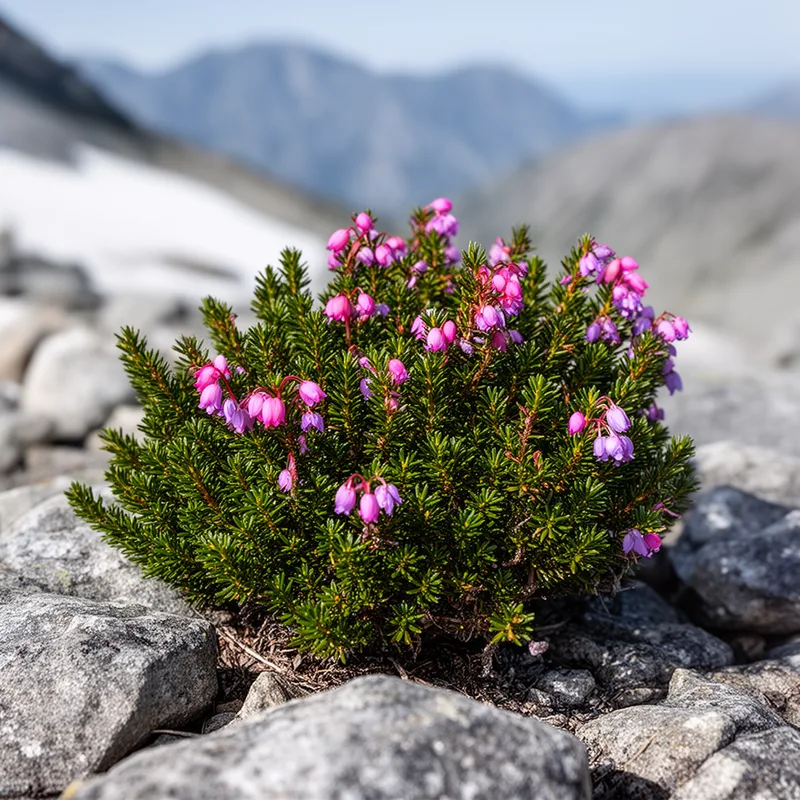
Phyllodoce caerulea
- noun
- Specialized
- The delicate flowers of Phyllodoce caerulea brighten alpine meadows every spring.
Examples
-
Hikers spotted Phyllodoce caerulea growing among the rocks above the treeline.
-
Botanists recorded several clusters of Phyllodoce caerulea at the high-altitude research station.
-
The Phyllodoce caerulea thrives in rocky alpine environments.
-
Have you ever seen a Phyllodoce caerulea in bloom?
-
Hikers spotted Phyllodoce caerulea growing among the rocks above the treeline.
-
The delicate flowers of Phyllodoce caerulea brighten alpine meadows every spring.
-
Botanists recorded several clusters of Phyllodoce caerulea at the high-altitude research station.
Synonyms
A small evergreen bush that grows on cold mountains and in Arctic areas with pink flowers

A small evergreen shrub with tiny leaves and pink or purple flowers that grows on high mountain tops

A small evergreen shrub with tiny leaves and pink or purple flowers that grows on high mountain slopes
Surface Forms
Morphology
Phyllodoce + caerulea
This is a Latin binomial (scientific) name rather than a normal English compositional phrase, so a B1 learner who knows the constituent strings would not be able to derive the plant description from them. The genus name is specialized and the species epithet is Latin (even if related to 'blue' etymologically), making the overall meaning non‑predictable in ordinary English usage.
Etymology
Phyllodoce caerulea is a scientific name made from an old Greek name and a Latin color word: Phyllodoce was a sea-nymph in Greek stories and caerulea means 'blue' in Latin. So the name gives a simple picture of a delicate, blue-flowered plant, which helps you remember this small evergreen shrub with tiny leaves that grows in high mountain areas.

