
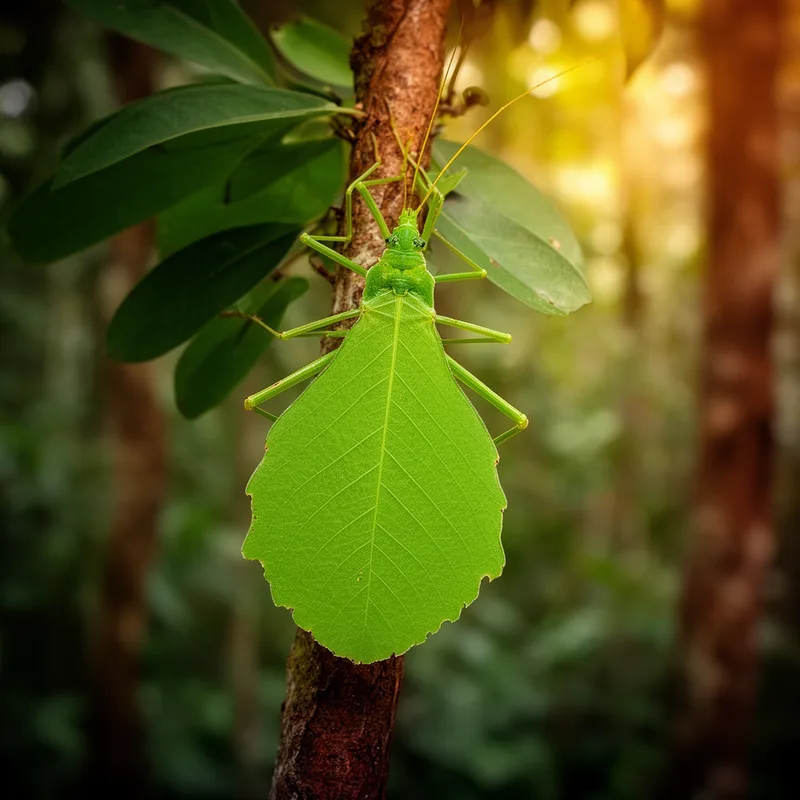
Phyllidae
- noun
- Specialized
- The Phyllidae are masters of camouflage, blending seamlessly into their leafy surroundings.
Examples
-
Researchers study Phyllidae to understand the evolution of mimicry in insects.
-
Many species in the Phyllidae family are found in tropical forests of Southeast Asia.
-
The Phyllidae family includes many species that mimic leaves.
-
Have you ever seen a Phyllidae in the wild?
-
The Phyllidae family consists of insects that are experts at disguising themselves as leaves.
-
Many insects belonging to the Phyllidae family can be found in humid tropical regions.
-
Leaf insects, known as Phyllidae, can often be mistaken for real leaves due to their unique shape.
Synonyms
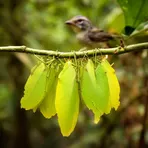
A group of insects that look like leaves to hide from animals
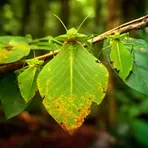
Insects with wide flat bodies that look like leaves

A family of insects that look like leaves to hide from other animals
Compounds
Surface Forms
Morphology
Phyllidae = Phyllium (opaque) = phyll + idae
Formed from a scientific genus stem plus the specialized taxonomic suffix '-idae', which is not a productive or familiar English derivation for general learners.
Etymology
The word Phyllidae comes from the Greek root phyll- meaning 'leaf', the same root you see in chlorophyll, and the animal-family ending -idae. So Phyllidae are 'leaf' insects, and their leaf-like bodies help them hide among real leaves.

