

Phthirius pubis
- noun
- /ˈθɪr.i.əs ˈpjuː.bɪs/
- Specialized
- Phthirius pubis infests the pubic hair and can cause severe itching.
Examples
-
Unlike head lice, Phthirius pubis prefers coarse hair found in the pubic region.
-
Treatment for an infestation of Phthirius pubis usually involves medicated shampoos.
-
Phthirius pubis is most commonly spread through close physical contact between people.
-
The doctor diagnosed her with an infestation of Phthirius pubis.
-
Many people are unaware of Phthirius pubis and its effects.
-
The symptoms of an infestation by Phthirius pubis often include irritation and discomfort.
-
To eliminate Phthirius pubis, it is important to treat all affected individuals.
Synonyms

 27
9.9
27
9.9

A small insect that lives on pubic hair and makes you itch
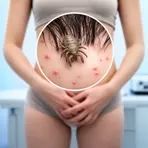
A small insect that lives in the hair of the private parts and causes itching

A small insect that lives in pubic hair and other body hair and makes the skin itch
Surface Forms
Morphology
The compound is compositionally transparent: given 'Phthirius' (a genus of human‑infesting insects) and 'pubis' (the front pelvic region), a learner can infer it denotes an insect associated with the pubic area. Although technical/Latinized, the meaning follows a straightforward biological naming pattern that a B1 learner who knows both constituents can deduce.
Etymology
Phthirius pubis is a scientific name that comes from old words for a small 'louse' phthir- and the 'pubic' area pubis. It literally means 'louse of the pubic hair', so the name fits the tiny insects that live in coarse pubic hair and make the skin itch.