
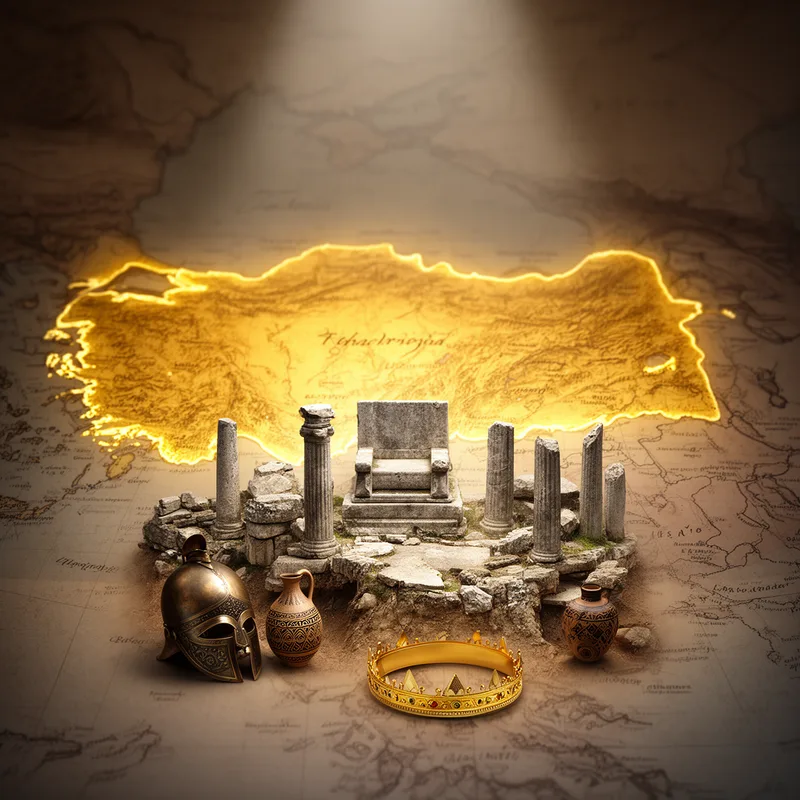
Phrygia
 1
9.9

- proper noun
- Celts settled as far east as Asia Minor, founding colonies in parts of Phrygia in the third century B.C.
Loading YouTube…
Watch on YouTubeSo he's he's born in this place, Hirropoulos in Phrygia, so part of Asia Minor.
- So he's he's born in this place, Hirropoulos in Phrygia, so part of Asia Minor.
Examples
-
This revival arose from the teaching of a man named Montanus and two women, Maxima and Priscilla, in Phrygia.
Blog text (13) -
Zarkov's next move will be to land in Phrygia, an attempt to secure Polaroit!
-
Sail to Phrygia.
-
So he's he's born in this place, Hirropoulos in Phrygia, so part of Asia Minor.
-
After crossing, he marched through Phrygia one stage, a distance of eight parasangs, to Kalasi, an inhabited city, large and prosperous.
-
Attis, of Phrygia, born of the virgin Nana on December 25th, crucified, placed in a tomb and after 3 days, was resurrected.
-
But his efforts ran afoul of pro-Arian Emperor Constantius II, who banished him to Phrygia, which is modern-day Turkey.
Blog text (14) -
They come here from Alexandria... ...Messina... ...Carthage... ...Cyprus... ...Rome... ...Corinth... ...Athens... ...Phrygia... ...and Judea.
-
Laodicea was the capital of Phrygia, an ancient country located in Asia Minor than corresponds to parts of modern Turkey.
-
Archaeologists and historians believe that real King Midas ruled in Phrygia, a region that is now part of central Turkey.
Surface Forms
Etymology
Phrygia comes from the name of an ancient people, the Phrygians, and the Greeks used that name for the area where they lived in the western and central part of modern Turkey. A helpful way to remember it is King Midas, a famous Phrygian ruler, so Phrygia means that old country and its people.