
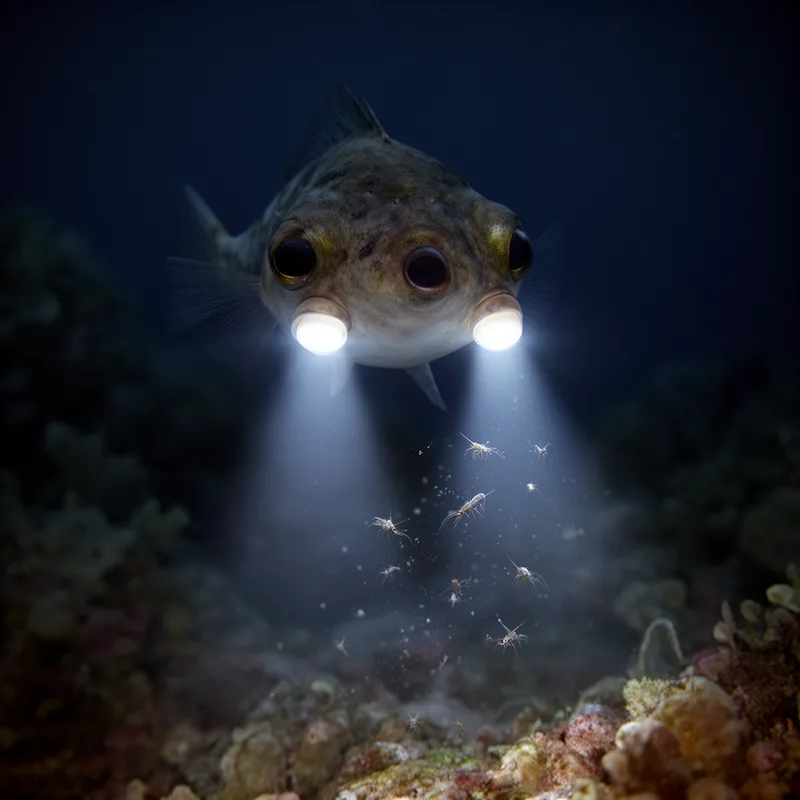
Photoblepharon
- noun
- /ˌfoʊtəˈblɛfərɒn/
- Specialized
- The Photoblepharon uses its luminous organs to lure prey and evade predators at night.
Examples
-
Biologists study the Photoblepharon to better understand the evolution of bioluminescence in marine fish.
-
Several species within the genus Photoblepharon inhabit coral reefs throughout Indonesia and the Philippines.
-
The Photoblepharon is a fascinating species of fish.
-
Many Photoblepharons inhabit the coral reefs of the Pacific.
-
The Photoblepharon, known for its bioluminescent organs, thrives in the coral reefs of the Western Pacific.
-
Researchers have documented various behaviors of the Photoblepharon related to its unique light-producing capabilities.
-
During night dives, you can spot the Photoblepharon as it glows in the dark waters, attracting small fish.
Surface Forms
Morphology
Photoblepharon = photo + blephar + on
This is a learned Greek-style taxonomic name built from forms meaning 'light' and 'eyelid', but the fish-genus reference is not guessable from the parts for an average learner.
Etymology
Photoblepharon comes from Greek words photo- meaning 'light' (the same 'photo' you see in photograph) and -blepharon meaning 'eyelid' or 'eye'. So the name is like 'light eye', which fits these fishes that have glowing organs under their eyes.

