

Pholis gunnellus
- noun
- Specialized
- The Pholis gunnellus is commonly found hiding in the rocks along the northern Atlantic coast.
Examples
-
The Pholis gunnellus is often found hiding among rocks on the seashore.
-
Many chefs love to cook with Pholis gunnellus for its unique flavor.
-
Fishermen sometimes refer to the Pholis gunnellus as the butterfish because of its slippery body.
-
The biology class studied the unique characteristics of Pholis gunnellus during their field trip to the coast.
-
The Pholis gunnellus is often found in rocky coastal areas.
-
Fishermen sometimes refer to the Pholis gunnellus as the butterfish because of its slippery body.
-
Many chefs appreciate cooking with Pholis gunnellus due to its delicate and unique flavor.
Synonyms


 1
6.7
1
6.7
A small flat sea fish with soft flesh often eaten
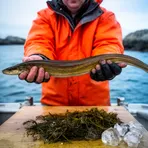
A long slim fish with no scales that lives in northern Atlantic waters and people eat
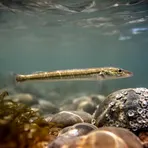
A small, thin sea fish that looks like a young eel
Surface Forms
Morphology
Pholis + gunnellus
This is a Linnaean binomial (scientific name) composed of a genus and species epithet in Latinized form, which functions as an arbitrary taxonomic label rather than a compositional English phrase. Knowing the parts (a proper genus name and a non‑English species form) does not allow a B1 learner to infer the meaning 'a butterfish/rock gunnel'; such names are language‑neutral labels and not semantically transparent to general learners.
Etymology
Pholis gunnellus may come from old names for small, rock-living fish: Pholis points to a fish that hides in rock holes and gunnellus was used for slippery, eel-like fish. This image of a slippery fish hiding among rocks helps you remember it means 'a slippery, rock-dwelling butterfish'.