
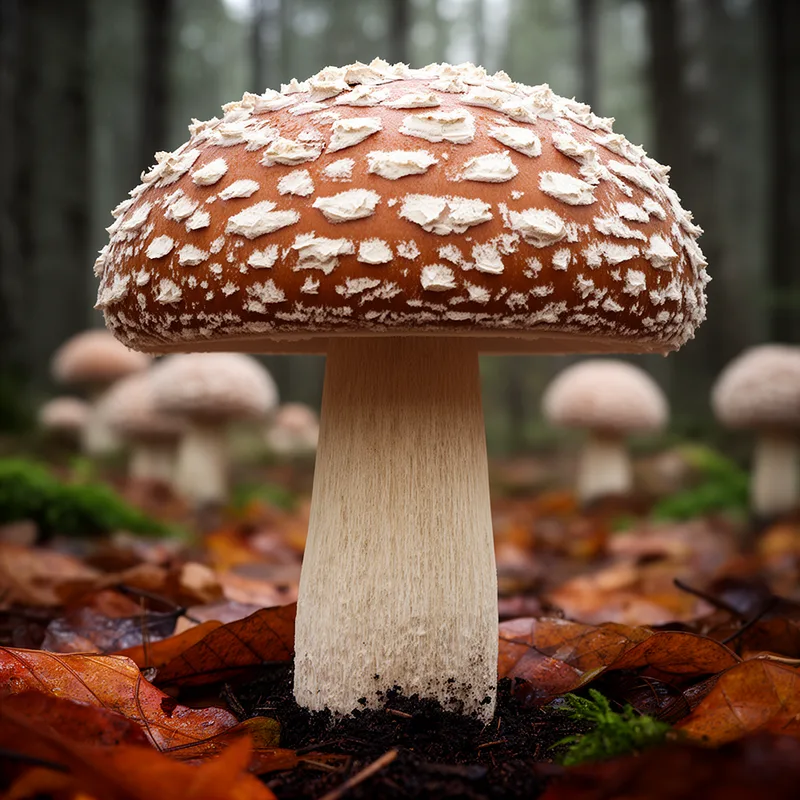
Pholiota destruens
- noun
- Specialized
- Mycologists identified the mushroom as Pholiota destruens due to its thick stalk and whitish scales.
Examples
-
The forest floor was dotted with Pholiota destruens after the heavy autumn rains.
-
The Pholiota destruens mushroom is often found in wooded areas.
-
You should avoid picking Pholiota destruens unless you are an expert in mushroom identification.
-
Look at that impressive Pholiota destruens!
-
Mycologists identified the mushroom as Pholiota destruens because of its thick stalk and whitish scales.
-
The forest floor was dotted with Pholiota destruens after the heavy autumn rains, showcasing its distinctive appearance.
-
You should avoid picking Pholiota destruens unless you are an expert in mushroom identification to prevent potential poisoning.
Surface Forms
Morphology
Pholiota + destruens
This is a Latin binomial (a taxonomic species name) rather than a compositional English phrase; the specific descriptive meaning (large fungus with whitish scales and a thick stalk) cannot be derived from the parts. 'Pholiota' is a technical genus label and 'destruens' is not an English word in the learner's lexicon, so a B1 learner who knows the constituents would still not predict the idiomatic/species-specific description.
Etymology
Pholiota destruens gets its name from old words that describe how it looks and where it grows. Pholiota means 'scale' for the whitish scaly cap and veil bits, and destruens means 'destroying' because these mushrooms often grow on and help break down dead wood, so the name fits this large, scaly fungus with a thick, hard stalk.

