
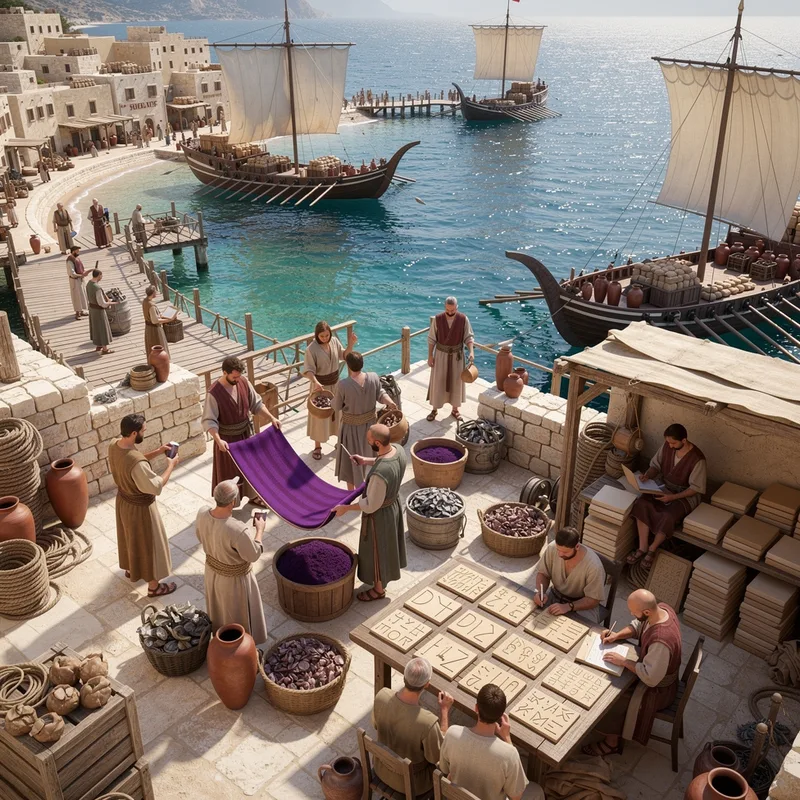
Phoenicia
 1
9.8

- proper noun
- /fəˈniːʃə/
- The ancient civilization of Phoenicia made significant contributions to the development of the alphabet.
Examples
-
Phoenicia was known for its advanced maritime trade and rich cultural heritage.
-
At the time, Phoenicia was part of the Roman Empire.
Blog text (4) -
Around 30 B.C., craftsmen in Phoenicia (Lebanon and Syria) discovered that if they blew through a hollow metal tube into a lump of molten glass, it would inflate and take shape.
Blog text (4) -
Bernal argues on three fronts that Egypt and Phoenicia had crucial and manifest formative influences on Greek language and civilization, beginning in the second millennium B.C.E. and continuing through classical times.
Academic text (1991) -
If you check out the history of the modern European alphabet, you will find that its lineage is: Rome, Greece, Phoenicia (the Greek word for Canaan), the ancient Egyptian Metu Neter (Greek name, hieroglyphics).
Blog text (26) -
Many artifacts from Phoenicia have been discovered along the eastern Mediterranean coast.
Synonyms

 1
9.9
An ancient group of coastal city-states in the eastern Mediterranean known for sea trade and the Phoenician alphabet
Surface Forms
Etymology
Phoenicia comes from the old Greek word phoinix, which meant 'purple' and refers to the famous purple dye that its traders sold. So Phoenicia was a land by the sea known for its sailors and traders who helped spread the alphabet.