
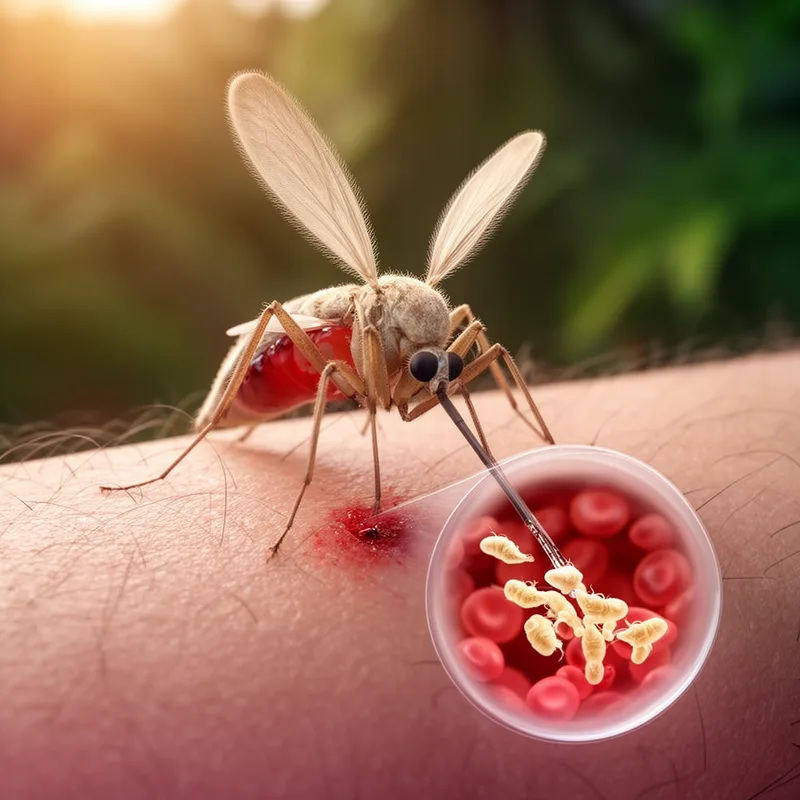
Phlebotomus papatasii
- noun
- /fləˈbɒtəməs pæpəˈtɑːsiːaɪ/
- Specialized
- The bite of a Phlebotomus papatasii can transmit serious diseases to humans and animals.
Examples
-
Phlebotomus papatasii is recognized as a primary vector of leishmaniasis in many tropical regions.
-
Researchers are studying the behavior of Phlebotomus papatasii to find better ways to control its population.
-
The Phlebotomus papatasii is known for transmitting leishmaniasis.
-
Have you heard about Phlebotomus papatasii?
-
Phlebotomus papatasii is a significant vector that spreads leishmaniasis and can be found in various tropical areas.
-
In studies of disease transmission, Phlebotomus papatasii has been identified as a key species responsible for spreading sandfly fever.
-
Health officials warn that the bite from a Phlebotomus papatasii can lead to severe health complications in those infected.
Synonyms



Surface Forms
Morphology
Phlebotomus + papatasii
This is a scientific binomial formed from the genus name 'Phlebotomus' plus a species epithet; if a learner knows 'Phlebotomus' as a genus of disease‑transmitting sand flies they can infer the phrase denotes a particular species of that genus. The specific epithet 'papatasii' functions as a label rather than contributing an idiomatic meaning, and taxonomic naming is a compositional, cross‑linguistic pattern, so the overall referent is derivable from the parts.
Etymology
Phlebotomus papatasii likely comes from old Greek word parts plus a species name used by early researchers. Phlebotomus combines parts that mean 'vein' and 'to cut', giving the image of a tiny fly that 'cuts' skin to drink blood, and papatasi names this particular sand fly. So the name points to the fly's habit of biting and spreading disease.