
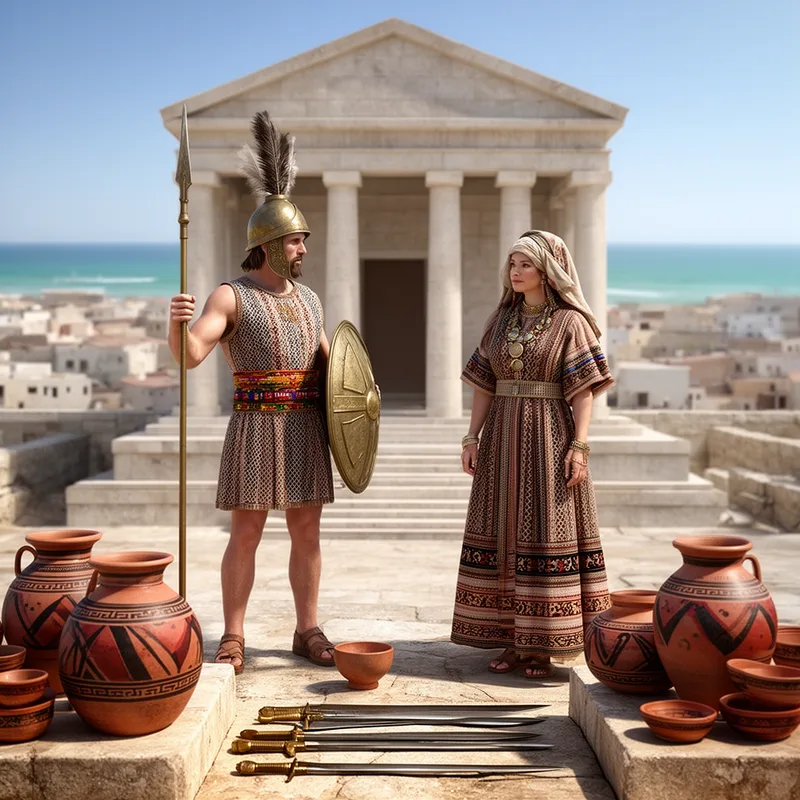
Philistine
 3
9.5

Relating to the ancient people and culture of Philistia
- adjective
- /ˈfɪlɪstiːn/
:
filisteo
- Amatsia, lazy cat-eyes and a Philistine profile with a nose that descends in a straight line from his forehead, comes every afternoon to the Barzels' house in Rehavia to tell Hulda about his latest conquests.
Examples
-
The museum's exhibit on ancient history featured a section dedicated to the Philistine civilization and its influence on the region.
-
The archaeological findings in Gaza revealed many artifacts from the Philistine culture, including pottery and tools.
-
Historically, the Philistine people were known for their conflicts with the Israelites over territory and trade.
Compounds


Surface Forms
Philistine positive
Morphology
Etymology
Philistine comes from the name of an ancient people called the Philistines, whose land was called Peleshet in Hebrew, meaning 'land of the Philistines'. So, when something is described as Philistine in this sense, it means it is from or about that old place and its culture.