
Phalguna
- noun
- Indian
- The month of Phalguna usually corresponds to February and March in the Gregorian calendar.
Examples
-
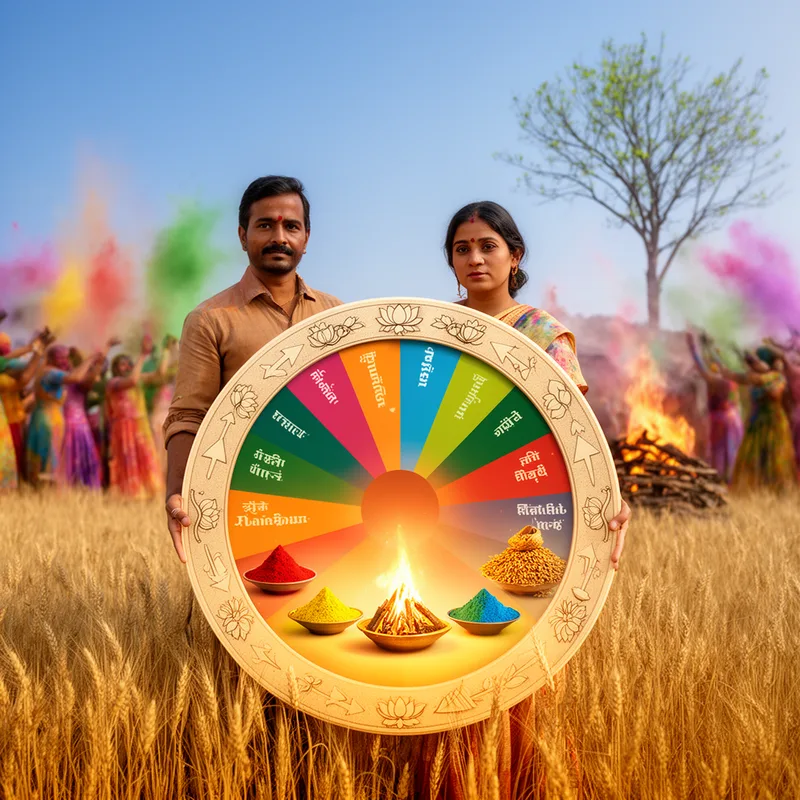
Many traditional festivals are celebrated during Phalguna, including Holi.
-
In Phalguna, many people participate in religious rituals.
-
Farmers in India often prepare for the harvest as Phalguna approaches.
-
The festival of Holi is celebrated in Phalguna.
-
Farmers in India often prepare for the harvest as Phalguna approaches.
-
The month of Phalguna usually corresponds to February and March in the Gregorian calendar.
-
Many traditional festivals are celebrated during Phalguna, including Holi.
Synonyms

The twelfth month in the Hindu calendar, usually in February or March
Surface Forms
Etymology
Phalguna comes from Sanskrit, where the older form Phālguna is tied to the bright full-moon time and to spring flowers, so it suggests being 'full' or 'flowering'. So, Phalguna is the late winter/early spring month in the Hindu calendar, a time for festivals like Holi.

