
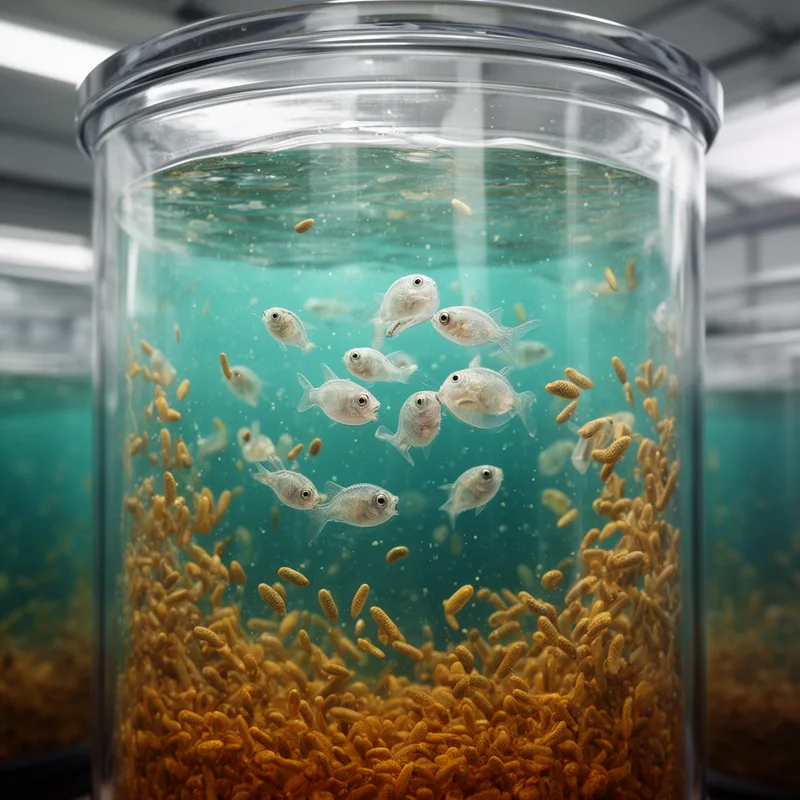
Phaeodactylum tricornutum
- noun
- Specialized
- Many hatcheries rely on Phaeodactylum tricornutum as a nutritious food source for young oysters.
Examples
-
Researchers study Phaeodactylum tricornutum to improve aquaculture practices and increase shellfish survival rates.
-
The Phaeodactylum tricornutum culture needs careful monitoring for optimal growth.
-
The cultivation of Phaeodactylum tricornutum has become essential in sustainable marine farming.
-
Did you see Phaeodactylum tricornutum?
-
Many hatcheries rely on Phaeodactylum tricornutum as a nutritious food source for young oysters.
-
The cultivation of Phaeodactylum tricornutum has become essential in sustainable marine farming.
-
Researchers study Phaeodactylum tricornutum to improve aquaculture practices and increase shellfish survival rates.
Synonyms
 5
8.8

A very small one-celled living thing in water with a glass-like shell
 1
8.1
A very small living thing like a water plant that you can only see with a microscope
Surface Forms
Morphology
Phaeodactylum + tricornutum
This is a Latin binomial taxonomic name functioning as a proper noun for a specific microalga; its meaning (a particular species used in aquaculture) is an arbitrary label rather than a compositional phrase. The constituent strings are non‑English/unknown morphemes and do not provide a transparent, predictable clue that a B1 learner could use to infer the species identity or its use, so the expression is opaque.
Etymology
Phaeodactylum tricornutum gets its name from old Greek parts: phaeo 'dark', dactylum 'finger' and tricornutum 'three-horned', because the tiny algae often look dark and have finger- or three-point shapes under a microscope. So the name helps you picture this small sea alga that is often grown as food for young shellfish and fish.