
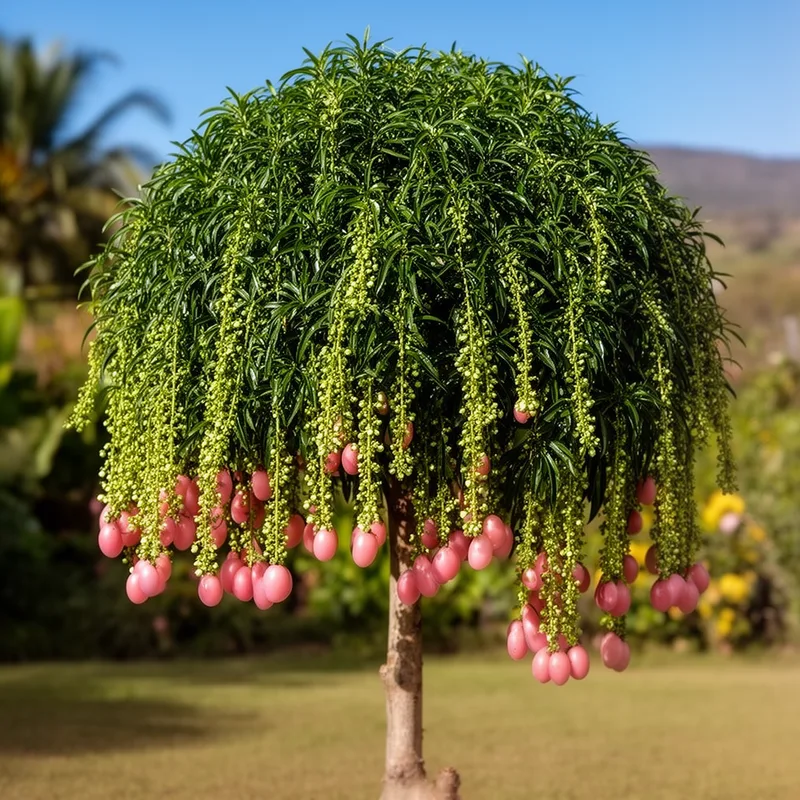
Peruvian mastic tree
- noun
- Clusters of rose-pink fruit hang from the branches of the Peruvian mastic tree each autumn.
Examples
-
Gardeners often plant the Peruvian mastic tree for its attractive foliage and flowers.
-
The Peruvian mastic tree thrives in warm, subtropical climates and is admired for its ornamental value.
-
Look at the Peruvian mastic tree!
-
The Peruvian mastic tree thrives in the warm climate of Peru.
-
Clusters of rose-pink fruit hang from the branches of the Peruvian mastic tree each autumn.
-
Gardeners often plant the Peruvian mastic tree for its attractive foliage and flowers.
-
The Peruvian mastic tree thrives in warm, subtropical climates and is admired for its ornamental value.
Synonyms

A small evergreen tree from Peru that has drooping branches and pink berries

A small evergreen tree from Peru with pink fruits used like pepper
How Tall


Surface Forms
Morphology
The phrase is fully compositional: 'Peruvian' specifies origin, 'mastic' names the plant/resin type, and 'tree' denotes the plant category. A B1 learner who knows these constituents can infer it refers to a mastic-related tree from Peru, so the meaning is directly derivable from the parts.
Etymology
Peruvian mastic tree gets its name from the sticky mastic 'resin' people once 'chew' like gum and from the fact the tree comes from Peru. Picture pulling a small drop of sap from a branch and chewing it; that image helps you remember the name and why the tree is known for its resin.