
Perseus
 2
7.0

- proper noun
- /ˈpɜrsiəs/
- Splashy star clusters like M41 in Canis Major and the Double Cluster in Perseus, along with enormous star factories like Orion's M42, add luster to the scene.
- Perseus constellation
- NGC 1491 in Perseus
- Perseus cluster
Loading YouTube…
Watch on YouTubeBut we actually look at their measurements and say, OK, this star algal, it's the second brightest storm in the constellation Perseus.
- But we actually look at their measurements and say, OK, this star algal, it's the second brightest storm in the constellation Perseus.
Examples
-
It moves steadily northward, from Eridanus through Taurus and into Perseus, and thus climbs higher in the evening sky.
Academic text (2004) -
This plate shows Perseus as he appears in the sky.
Academic text (1990) -
The center of the blast was in a region rich in stars 6,000 light-years away, in the direction of the constellation of Perseus.
Academic text (1992) -
The dotted object in the sword arm of Perseus depicts a twin cluster of stars known to modern astronomers as the Double Cluster.
Academic text (1990) -
"The Perseids were named because they appear to shoot like arrows from the constellation of Perseus, the archer," my father had said to me when I was a child and we would watch the showers from the dark hills on the far side of the Golden Gate Bridge.
Fiction book (1993) -
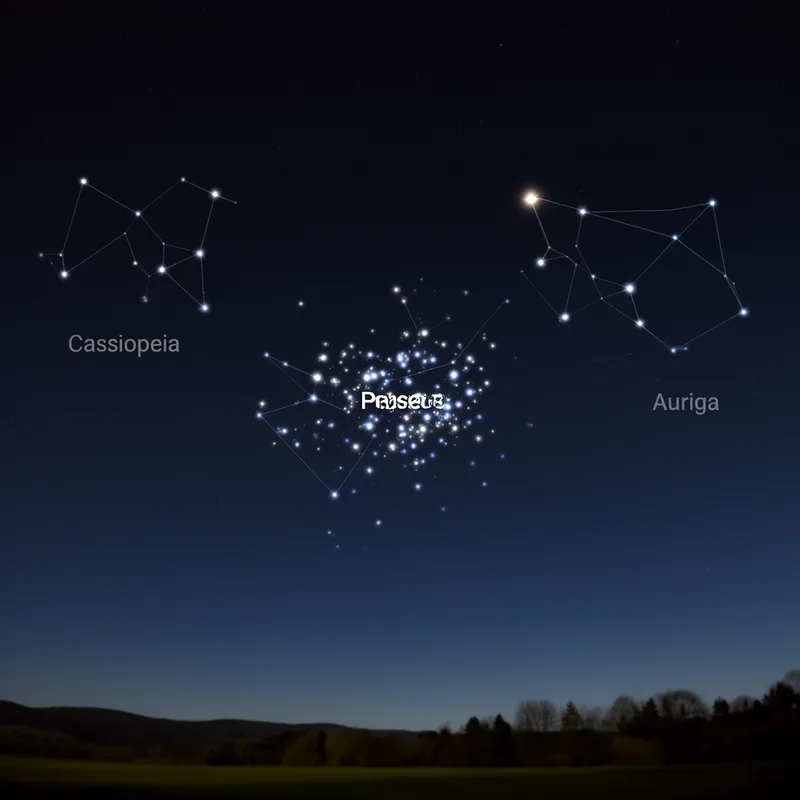
The constellation Perseus can be easily recognized by its distinctive shape in the night sky.
-
During the autumn nights, stargazers look for Perseus between Auriga and Cassiopeia.
-
In mythology, Perseus is known as the hero who defeated Medusa.
Surface Forms
Etymology
Perseus is also the name of a constellation in the northern sky, named after the same Greek hero who fought Medusa. That's why the group of stars and the Perseid meteor shower carry his name, so you can picture the hero in the sky to remember this constellation.