
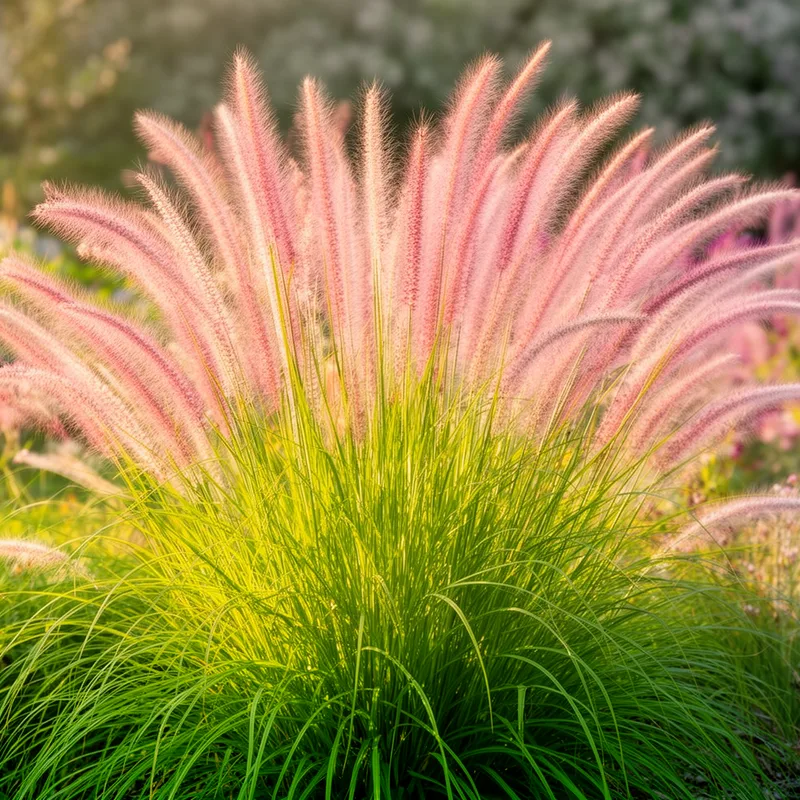
Pennisetum setaceum
- noun
- Specialized
- Gardeners often plant Pennisetum setaceum for its striking, feathery plumes and graceful arching leaves.
Examples
-
The soft, pinkish spikes of Pennisetum setaceum sway beautifully in the summer breeze.
-
In some regions, Pennisetum setaceum is considered invasive due to its rapid spread.
-
The garden features beautiful Pennisetum setaceum plants.
-
I love the way Pennisetum setaceum sways in the wind.
-
Gardeners often plant Pennisetum setaceum for its striking, feathery plumes and graceful arching leaves.
-
The soft, pinkish spikes of Pennisetum setaceum sway beautifully in the summer breeze.
-
In some regions, Pennisetum setaceum is considered invasive due to its rapid spread.
Synonyms
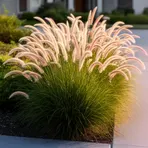
A tall decorative grass with long curved flower heads that people use in gardens
Surface Forms
Morphology
Pennisetum + setaceum
This is a scientific Latin binomial: knowing 'Pennisetum' (a genus of grasses) would cue that it names a grass species, but the species epithet 'setaceum' is not a common English word (and is missing a dictionary gloss here), so the specific sense 'fountain grass, tall ornamental with plumes' is not fully predictable. Because the genus gives a partial cue to category (a grass) but the full, specific meaning requires botanical/lexical knowledge of the epithet, the expression is only partially transparent to a B1 learner.
Etymology
Pennisetum setaceum comes from Latin words: penni- meaning 'feather' and setaceum meaning 'bristle' or 'hair'. The plant's long, soft flower plumes look like little feathers or a small fountain of hair, so the name fits this ornamental 'fountain grass'.

