
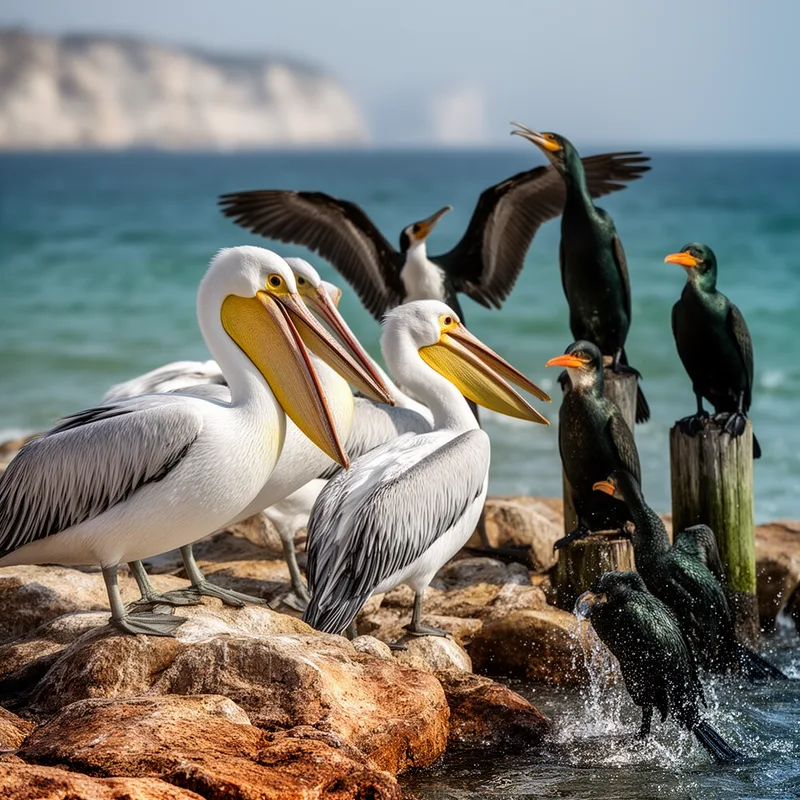
Pelecaniformes
- noun
- /ˌpɛlɪˈkænɪfɔːrmiːz/
- Specialized
- Pelicans and cormorants, both members of the Pelecaniformes, share similar nesting areas.
Examples
-
The Pelecaniformes are known for their distinctive beaks and aquatic habits.
-
Researchers studied the migration patterns of several bird families within the Pelecaniformes.
-
The Pelecaniformes are known for their unique feeding habits.
-
Did you know that Pelecaniformes include pelicans and cormorants?
-
Many species of Pelecaniformes are found near coastal regions, taking advantage of the abundant fish there.
-
Birdwatchers often look for Pelecaniformes in wetlands, where they can observe their hunting behaviors.
-
The Pelecaniformes order includes birds that are skilled in diving for fish, such as gannets.
Synonyms
A group of water birds like pelicans, cormorants, and gannets that catch fish
Compounds
- Specialized
A group of water birds like pelicans, cormorants, and gannets that catch fish
Surface Forms
Morphology
Pelecaniformes = pelican (semi-transparent) = pelecan + iformes
The taxonomic name is built from a pelican-related stem plus the scientific suffix -iformes, but the exact order label is technical rather than fully predictable from the parts.
Etymology
Pelecaniformes comes from pelecan- ('pelican') plus the ending -iformes (like in uniform) meaning 'in the shape of'. So Pelecaniformes simply names the group of birds that are 'pelican-like', which fits pelicans, cormorants and other similar water birds.

