
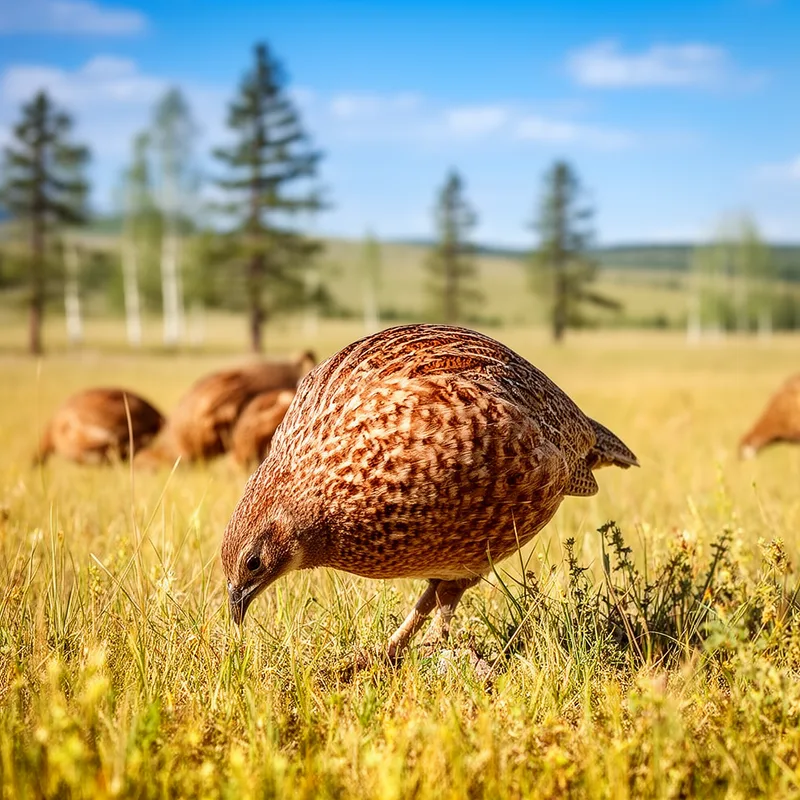
Pedioecetes phasianellus
- noun
- Specialized
- The Pedioecetes phasianellus displays its unique courtship dance during the breeding season.
Examples
-
Researchers observed a flock of Pedioecetes phasianellus feeding in the grasslands.
-
The Pedioecetes phasianellus is known for its distinctive sharp tail.
-
Conservation efforts are focused on protecting the Pedioecetes phasianellus from habitat loss.
-
Have you ever seen a Pedioecetes phasianellus in the wild?
-
Researchers observed a flock of Pedioecetes phasianellus feeding in the grasslands.
-
Conservation efforts are focused on protecting the Pedioecetes phasianellus from habitat loss.
-
The Pedioecetes phasianellus displays its unique courtship dance during the breeding season.
Synonyms
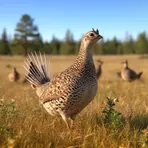
A large land bird with pointed tail feathers found in western prairies and open forests

A large brown bird with long, pointed tail feathers that lives in open grasslands

A North American bird with a pointed tail that lives in grasslands and flies fast

A North American bird that lives in grasslands with a sharp tail and a showy mating dance

A brown bird with spotted feathers that lives on grasslands in western North America
Surface Forms
Morphology
Pedioecetes + phasianellus
This is a Latin binomial (scientific) name serving as an arbitrary taxonomic label rather than a compositional English phrase. A B1 learner who knows the rare genus name and an unknown species epithet would not be able to derive the common meaning 'sharp‑tailed grouse' from the parts, so the meaning is not predictably built from the constituents.
Etymology
Pedioecetes phasianellus may come from words meaning 'plain-dweller' (Pedioecetes) and 'little pheasant' (phasianellus). This gives a clear picture of a pointy-tailed bird living on open grassland, which is why the name refers to the sharp-tailed grouse today.

