

Pediculus capitis
- noun
- Specialized
- An infestation of Pediculus capitis can cause intense itching and discomfort in children.
Examples
-
Doctors use special shampoos to eliminate Pediculus capitis from the scalp.
-
Pediculus capitis is most common among school-aged children due to close contact.
-
The Pediculus capitis is often found in children.
-
Do you know how to treat Pediculus capitis infestations?
-
Pediculus capitis is a common problem in schools, as children often share hats and brushes.
-
If you find Pediculus capitis in your child's hair, you should consult a doctor for treatment.
-
The symptoms of an infestation of Pediculus capitis include itching and irritation on the scalp.
Synonyms

A small insect that lives in human hair and feeds on blood
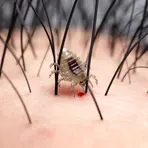
A small insect that lives on people's hair or clothing and feeds on blood
Surface Forms
Morphology
Pediculus + capitis
This is a Latin binomial: 'Pediculus' names a genus of lice and 'capitis' is the Latin genitive of 'caput' (head), so the literal composition means 'louse of the head'. However, the form is taxonomic/Latin rather than a standard English compositional pattern and the second element ('capitis') is not obvious to typical B1 learners, so the meaning is only partially recoverable. Because the sense can be derived by learners with knowledge of Latin roots but not by the average B1 English learner, it is best classified as semi-transparent.
Etymology
Pediculus capitis is a scientific name from Latin: pediculus means 'little louse' and capitis means 'head'. So the name points to the tiny insect that lives on the human head and causes itching.

