
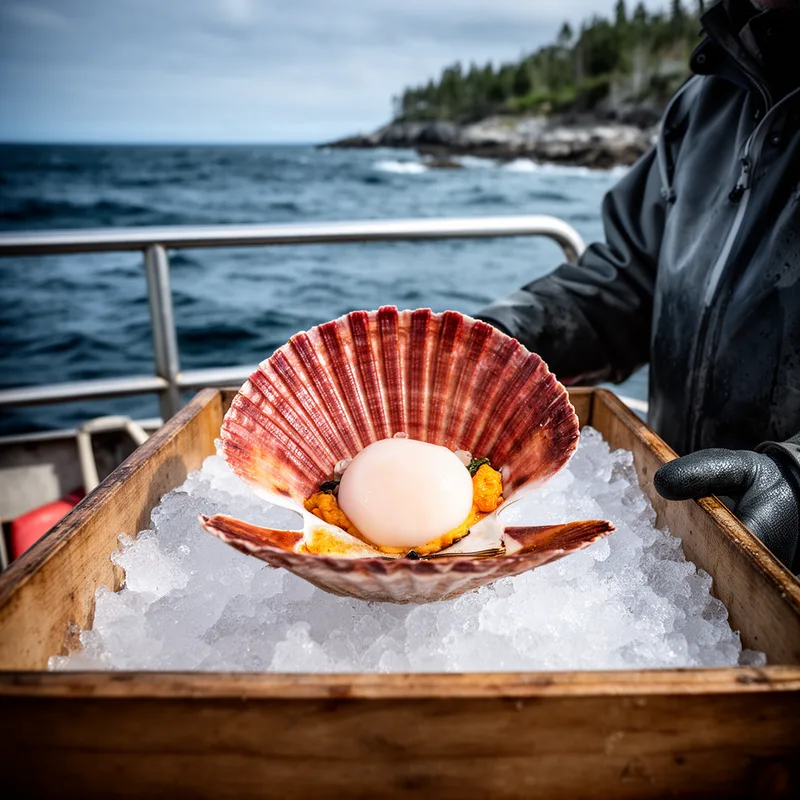
Pecten magellanicus
- noun
- Specialized
- The edible muscle of Pecten magellanicus is highly prized by chefs and seafood lovers alike.
Examples
-
Fishermen harvest Pecten magellanicus from the cold, deep waters off the New England coast.
-
Demand for Pecten magellanicus has led to sustainable fishing regulations in parts of the Atlantic Ocean.
-
The Pecten magellanicus is often found in deep Atlantic waters.
-
Did you know that Pecten magellanicus is a popular seafood choice?
-
The edible muscle of Pecten magellanicus is highly prized by chefs and seafood lovers alike.
-
Fishermen harvest Pecten magellanicus from the cold, deep waters off the New England coast.
-
Demand for Pecten magellanicus has led to sustainable fishing regulations in parts of the Atlantic Ocean.
Synonyms

 2
3.4
2
3.4

A large sea animal with a shell that people eat for its tender meat
A large edible sea clam that lives in cold Atlantic waters
Surface Forms
Morphology
Pecten + magellanicus
The first element 'Pecten' names a genus of scallops and would signal to a learner that the phrase refers to a type of scallop, but the second element 'magellanicus' is a Latin specific epithet (not an English word and not defined here) so the full species identity and attributes (large, deep-water Atlantic scallop, edible muscle) cannot be derived. Because part of the meaning (that it is a scallop) is transparent but the detailed, language-specific species meaning is not predictable from the constituents, this is only partially transparent.
Etymology
Pecten magellanicus may come from Latin: Pecten means 'comb' and creates the picture of a scallop's shell with comb-like ridges, and magellanicus links the animal to the seas sailed by the explorer Magellan. So the name helps you remember this is a large scallop from cold Atlantic waters that is valued for its edible muscle.