
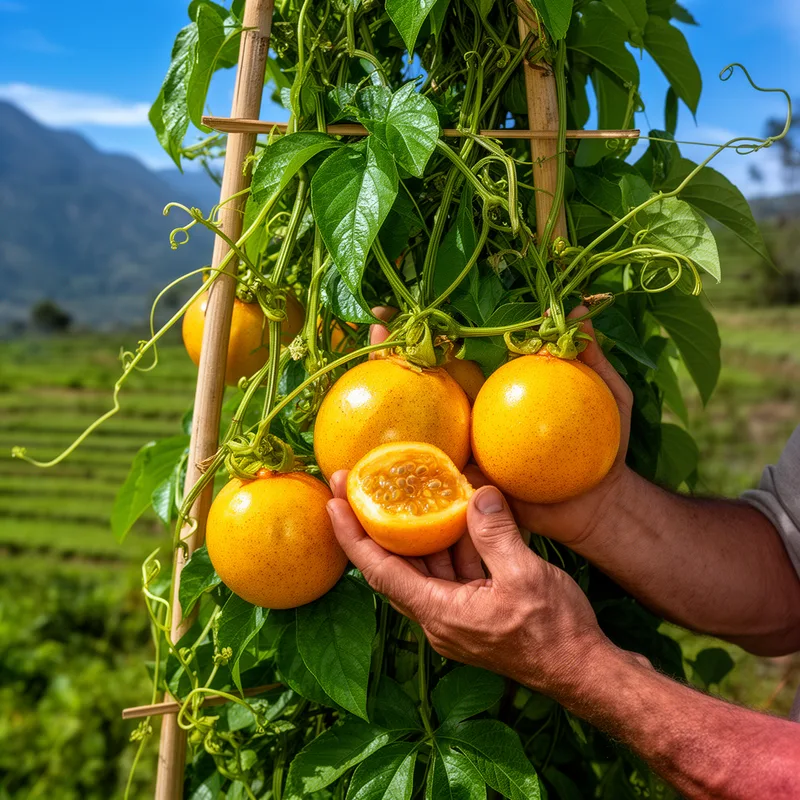
Passiflora ligularis
- noun
- Specialized
- The fruit of the Passiflora ligularis is prized for its sweet, aromatic pulp.
Examples
-
Farmers in Colombia cultivate Passiflora ligularis for local and international markets.
-
The Passiflora ligularis vine thrives in subtropical climates at high altitudes.
-
I love the taste of Passiflora ligularis!
-
The Passiflora ligularis can be found in many tropical regions.
-
Farmers in Colombia cultivate Passiflora ligularis for its sweet edible fruit, which is popular in local and international markets.
-
The Passiflora ligularis vine produces fruit that is cherished for its sweet and aromatic flavor.
-
In many tropical regions, people enjoy the delicious fruit of the Passiflora ligularis in desserts and beverages.
Synonyms

A sweet tropical fruit with soft, juicy pulp that smells nice
Surface Forms
Morphology
Passiflora + ligularis
This is a Latin binomial combining the genus name Passiflora (passionflower) with a species epithet, so compositionally it denotes a particular type of passionflower and that part is predictable. However, 'ligularis' is a specialized Latin epithet (not a common English word) and the specific information about its edible fruit and common name ('sweet granadilla') cannot be derived from the parts, so a B1 learner would not recover the full meaning without extra knowledge.
Etymology
Passiflora ligularis gets its name from two simple ideas: Passiflora means 'passion flower' because early Christians saw parts of the flower as signs of the 'passion' of Christ, and ligularis comes from a Latin word for 'little tongue' that describes the flower's tongue-shaped petals. So the name points to a passionflower with tongue-like parts and its sweet fruit, often called 'sweet granadilla'.

