
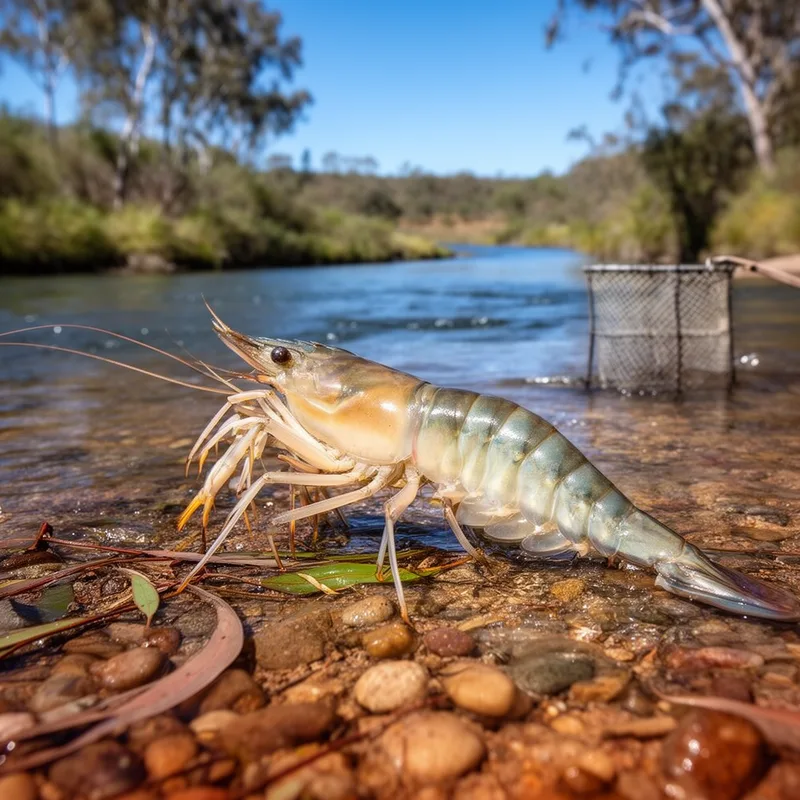
Palaemon australis
- noun
- Australian
- The Palaemon australis is prized by anglers for its impressive size and delicate flavor.
Examples
-
Researchers observed the habitat preferences of Palaemon australis in the upper reaches of the river.
-
The chef prepared a delicious dish with Palaemon australis.
-
Local fishermen rely on the annual migration of Palaemon australis to sustain their catch.
-
Have you ever tried Palaemon australis in a seafood restaurant?
-
The Palaemon australis is highly sought after in seafood markets due to its large size and sweet taste.
-
During the summer, many families enjoy catching Palaemon australis for their backyard barbecues.
-
The unique flavor of Palaemon australis makes it a favorite dish at local restaurants in Australia.
Synonyms

A large edible freshwater shrimp from Australian rivers with very long claws

A large freshwater shellfish people often eat that lives in rivers
Surface Forms
Morphology
Palaemon + australis
The compound is a Linnaean binomial: combining a genus name ('Palaemon' = a group of shrimps) with an epithet ('australis' = southern) yields a species label, so a learner who knows both constituents can infer it denotes a southern/member-of-Palaemon shrimp. However, the precise zoological details (large edible freshwater prawn, typical size) are specialist and not predictable from the words alone, and many B1 learners will not recognize Latin epithets, so the transparency is partial.
Etymology
The name Palaemon australis may come from old Greek sea stories: Palaemon was a figure linked to the 'sea', and australis means 'southern'. That's why the scientific name gives the image of a southern sea creature, which fits a large prawn found in Australian rivers.

