
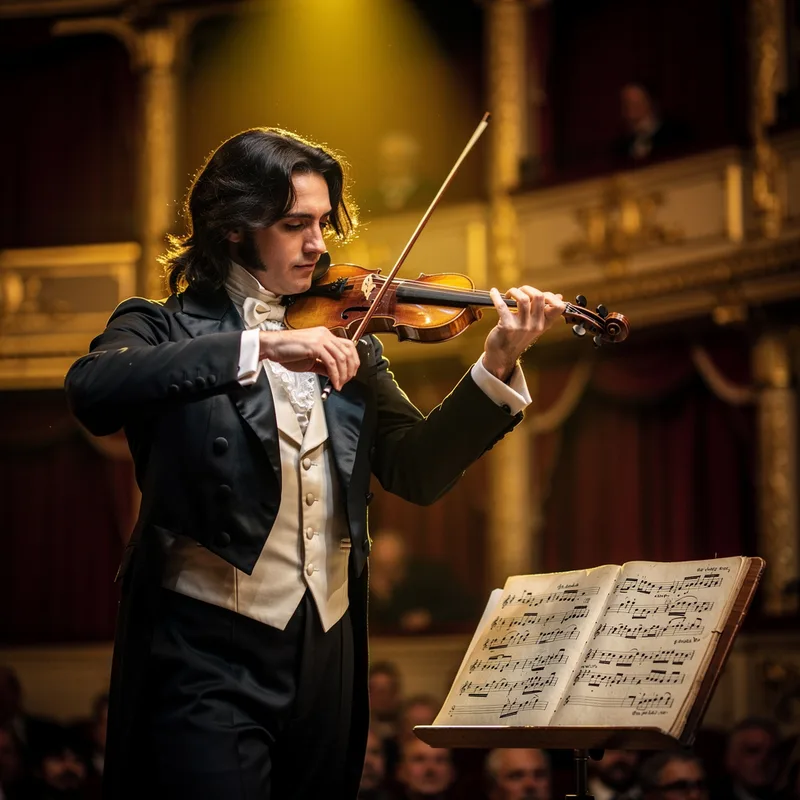
Paganini
 4
8.0

- proper noun
- /ˌpæɡəˈniː/
- Even more intriguing than his outlandish appearance and musical style was Paganini's life.
- portrait of Paganini
- violinist Niccolò Paganini
- Paganini's face
Examples
-
Ngwenyama will join the Fort Collins Symphony at 7:30 p.m. Saturday in works by Paganini and Berlioz.
-
In 2001, she was chosen for the rare honor of playing Paganini's violin.
-
The following year, from late March to early June 1832, Paganini was back in the French capital for a series of ten concerts.
Academic text (2001) -
For though not actually stricken by cholera, ill health was a permanent condition for Paganini.
Academic text (2001) -
Several great violinists, including Paganini and currently Isaac Stern, have preferred his instruments to Stradivari's.
Academic text (1994) -
While musical progressives applauded him, tradition-bound classicists decried Paganini, regarding him at best as a madman, at worst as a dangerous revolutionary.
Academic text (2001) -
You're playing something ridiculously romantic, like Paganini's "Cantabile" in D major, Opus 17.
Synonyms
An Italian violin player and composer known for very difficult pieces for the violin
Surface Forms
Etymology
Paganini is an Italian family name that comes from the Latin paganus, meaning 'country person' or 'villager', plus the Italian ending -ini, which often means 'little' or 'son of'. So Paganini originally meant something like 'little country person' or 'son of Pagano', and today it is known as the surname of the famous violinist Niccolò Paganini.