

Paderewski
 1
9.9

- proper noun
- /ˌpædəˈrɛfski/
- This number fell short of the 100,000 men anticipated when Paderewski first proposed raising a Polish-American force to be called Kosciuszko's Army under the auspices of the United States in April 1917.
- Jan Paderewski
Examples
-
In response to pleas from Paderewski and the French High Commission, the War Department allowed 113 volunteers with first papers, who had completed training in Canada, to stay in the Polish Army.
Academic text (1991) -
In the course of its history, Poland has had relatively few international cultural heroes: Copernicus, Chopin, Marie Curie, Paderewski, Pope John Paul II.
Academic text (1999) -
Throughout 1918, Paderewski approached the State Department for authority to issue certificates of Polish nationality.
Academic text (1991) -
The French, who understood the importance of Paderewski's support, complied with the maestro's insistence on full control of recruitment.
Academic text (1991) -
In 1923, the Polish Jewish Courier attacked the New York-based Forward for promoting a concert by Ignace Jan Paderewski.
Academic text (1996) -
There, from the workshop at his Sedgwick Street home, he produced a prize-winning sculpture, Paderewski, Study of an Immortal, that was exhibited at the New York World's Fair in 1939.
Blog text (24) -
Maj. Joseph Kozlowski took the place of Lieutenant Gasiorowski, who in any case had run afoul of Ignacy Jan Paderewski, the piano virtuoso who spoke for Polonia.
Academic text (1991) -
Ignacy Jan Paderewski served as the first Prime Minister of independent Poland in 1919.
-
Many admire Paderewski for his contributions to Polish music and politics.
-
In the United States, Paderewski is remembered as a legendary pianist and composer.
Synonyms


 1
9.9
Polish pianist, composer, and politician who became Poland's first prime minister in 1919
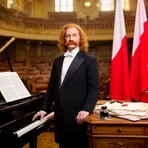
A Polish pianist, composer and politician who became Poland's first prime minister in 1919
Surface Forms
Etymology
Paderewski is a Polish last name, and the ending -ski means 'from' or 'of', so it originally showed a person's place or family. That's why Paderewski is remembered as the famous Polish pianist and statesman you read about.