
PSF
- noun
- Specialized
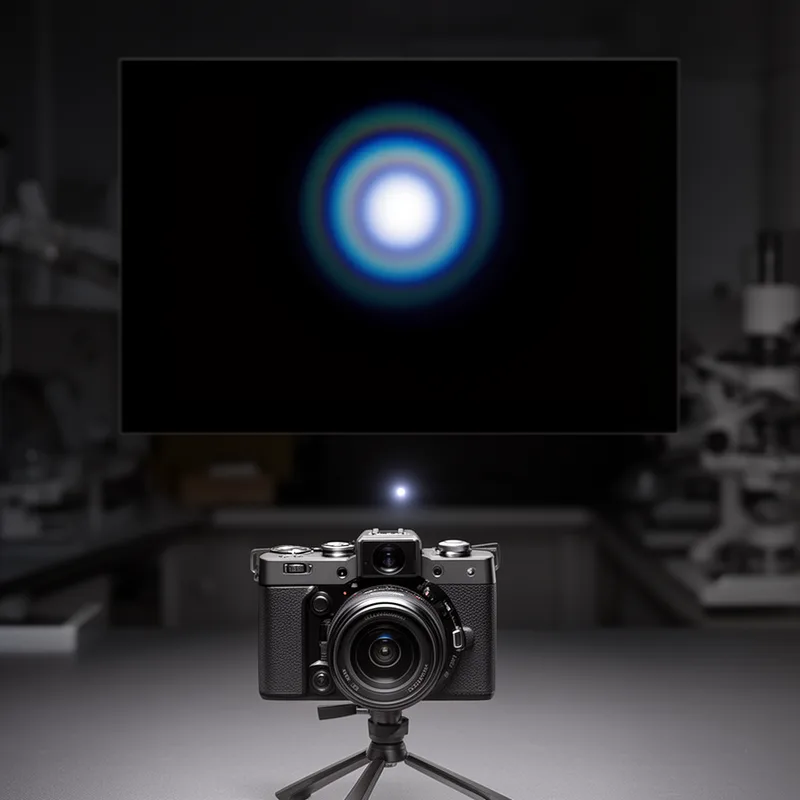
- That pattern is called the Point Spread Function, or PSF, and is a characteristic of the telescope, the detector, and even the wavelength of light detected.
Examples
-
The resultant blurring can be quantified by means of the point-spread function (PSF), often used to characterize the limits of imaging devices such as telescopes.
Academic text (2011) -
An image system is characterized by its point spread function (PSF), which is the 2-D distribution of image intensity of a hypothetical point target (15).
Academic text (1997) -
Sorry, this one, the PSF radius equals the point source spacing.
-
This light is spread over multiple pixels, but can be "de-convolved" with the known PSF of the instrument.
Blog text (1) -
Real objects have a light distribution ("point spread function" or "PSF") that is characteristic of the telescope (in HST's case, very nearly an ideal diffraction pattern; for interferometers, it can be quite complex).
Blog text (1) -
The PSF determines how light is blurred in astronomical images taken with a telescope.
-
In imaging systems, the PSF explains how the light from a point source spreads across pixels.
-
Analysts use the PSF to assess the clarity and accuracy of images produced by optical devices.
Surface Forms
Morphology
PSF = P + S + F
An initialism referring to a technical term (point spread function); the letters themselves do not transparently reveal this meaning without knowing the expansion.
Etymology
PSF stands for point spread function and comes from the idea that a single 'point' of light can be 'spread' or blurred by a lens or camera, so a PSF tells you how sharp or blurred an image will be.

