
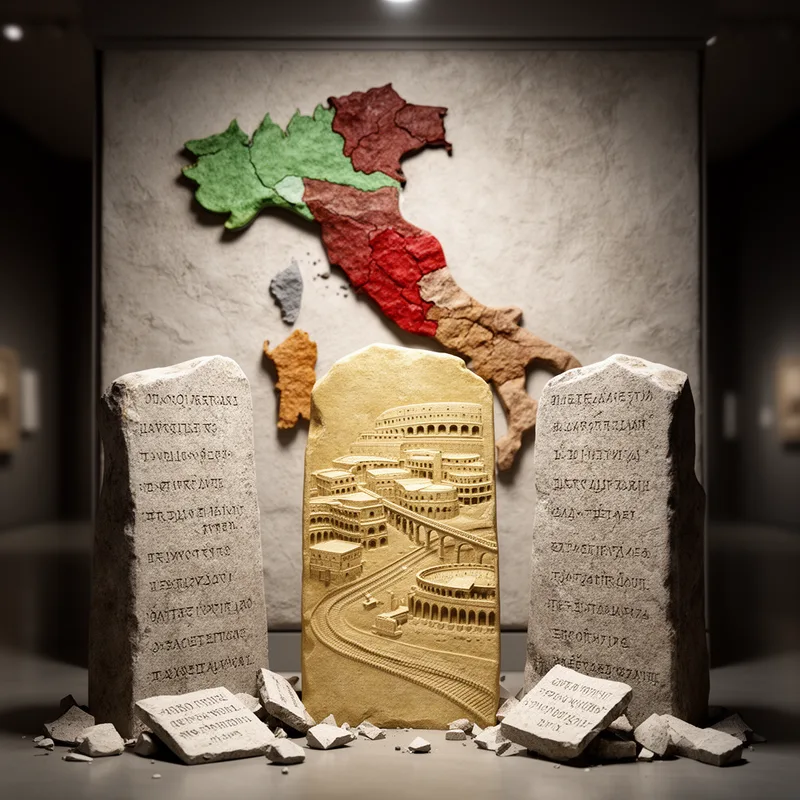
Osco-Umbrian
- noun
- Specialized
- The Osco-Umbrian languages were gradually replaced by Latin as the Roman Empire expanded.
Examples
-
Scholars study inscriptions in Osco-Umbrian to learn about Italic cultural history.
-
Linguistic similarities suggest that Latin and Osco-Umbrian share a common ancestor.
-
The Osco-Umbrian languages were once prevalent in ancient Italy.
-
Many historians study the Osco-Umbrian dialects for their unique features.
-
Scholars study inscriptions in Osco-Umbrian to learn about Italic cultural history.
-
The Osco-Umbrian languages were gradually replaced by Latin as the Roman Empire expanded.
-
Linguistic similarities suggest that Latin and Osco-Umbrian share a common ancestor.
Surface Forms
Morphology
Osco-Umbrian = Osco + Umbrian (semi-transparent) = Osco + Umbrian
Formally a compound of two language names so the structure is clear, but understanding requires specialized knowledge of those historical languages.
Etymology
Osco-Umbrian comes from the names of two ancient Italian peoples and their languages, the Osci and the Umbri. So Osco-Umbrian simply means the group of old languages spoken by those peoples, which were later replaced by Latin.

