
Orphism


 1
9.9
- noun
- /ˈɔrfɪzəm/
- Literature
- If assumptions of an ideological transfer from Orphism to Christianity can be made about peripheral Britannia, we can surmise the same about the Balkans, the actual birthplace of Orphism and an area where folk-Orphism was recorded as late as the twentieth century.
Examples
-
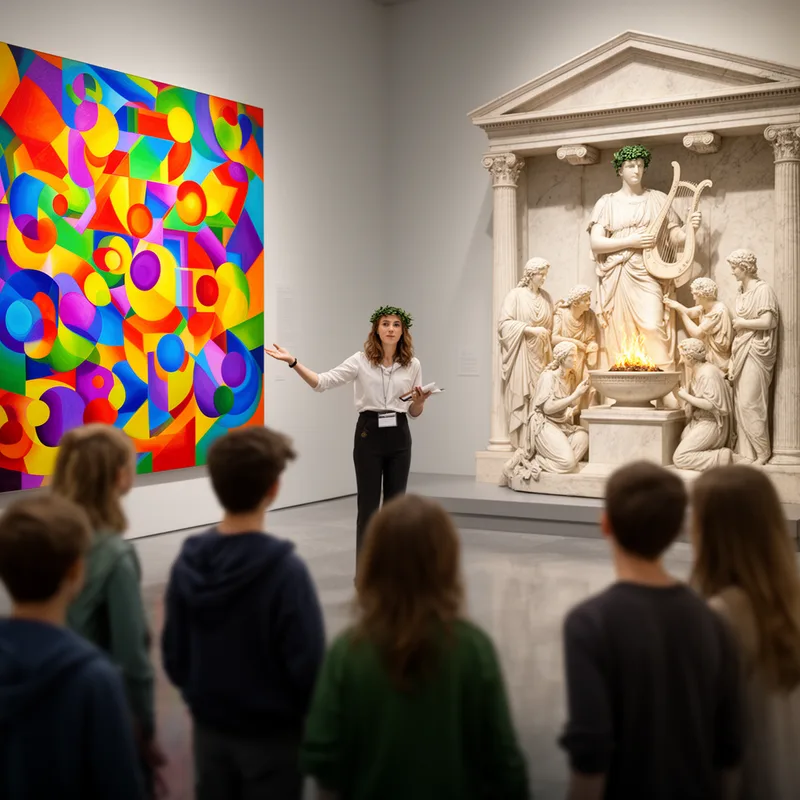
The vibrant colors in the artwork illustrate the essence of Orphism that captivates modern audiences.
-
This responsibility, anticipated to a certain extent by ancient Orphism, is the responsibility of a love, a desire, without limit.
Academic text (1997) -
There have also been a handful of short essays on Orphism, on Russian Constructivism, on Marc, on Klee, on Picasso, and on Rothko that have focused on color, and a few monographic studies with the same emphasis.
Academic text (1990) -
If assumptions of an ideological transfer from Orphism to Christianity can be made about peripheral Britannia, we can surmise the same about the Balkans, the actual birthplace of Orphism and an area where folk-Orphism was recorded as late as the twentieth century.
Academic text (2000) -
If assumptions of an ideological transfer from Orphism to Christianity can be made about peripheral Britannia, we can surmise the same about the Balkans, the actual birthplace of Orphism and an area where folk-Orphism was recorded as late as the twentieth century.
Academic text (2000) -
Many artists were influenced by Orphism, which emphasizes pure abstraction and bright colors in their works.
-
The principles of Orphism can be seen in the abstract forms created by artists like Robert Delaunay.
Synonyms
 1
9.8
An art movement that uses shapes, colors, and forms instead of real objects to show ideas or feelings
Surface Forms
Morphology
Orphism = Orpheus (semi-transparent) = Orph + ism
Formed from the name 'Orpheus' + '-ism' so the structure is clear, but the specific art-movement sense is specialized and not directly predictable from the name.
Etymology
Orphism comes from the name Orpheus, a famous Greek singer and poet who was said to charm people and even the dead with his music. That is why the art style called Orphism uses bright colors and abstract shapes to give a musical, moving feeling. It also names a set of ancient religious ideas said to come from Orpheus, about the soul and life after death.