
Orléans
- proper noun
- /ɔrˈleɪənz/
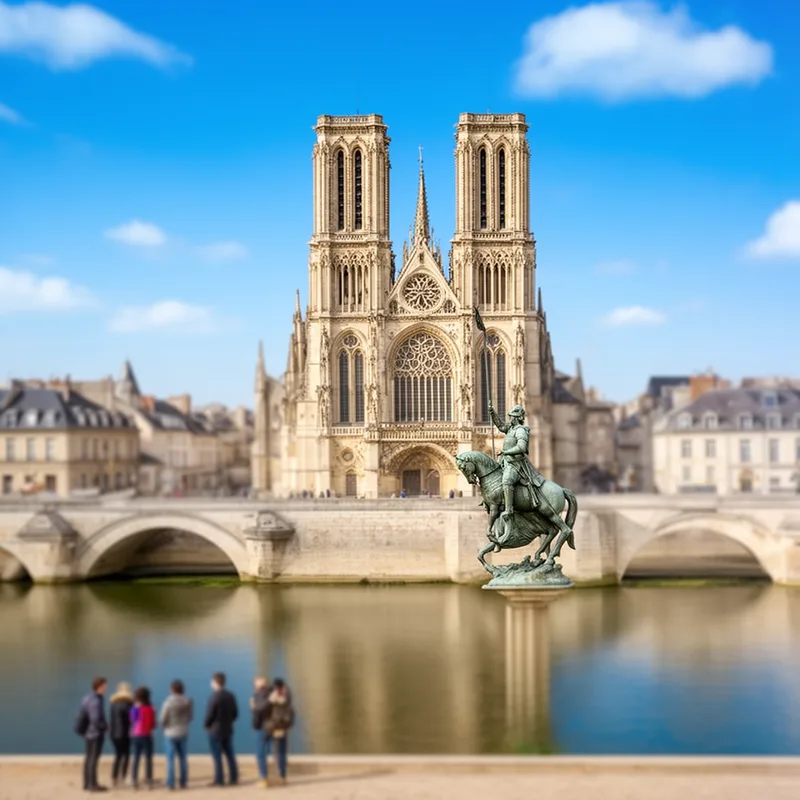
- Every year, visitors flock to Orléans to celebrate Joan of Arc's historic victory against the English.
- Louis of Orléans
Examples
-
In the end, Charlemagne's investigator sided with Theodulf, bishop of Orléans: the cleric ought not to have been granted sanctuary at Saint Martin's due to his prior conviction.
Academic text (2018) -
Joan of Arc is famously known as the "Maid of Orléans" for her role in lifting the siege in 1429.
-
His flight prompted the dispatch of a party from Orléans intent on securing him, though monks from Tours stopped them in their tracks.
Academic text (2018) -
From Orléans to Bastogne.
-
Indeed, prior to the university stood the cathedral schools of Chartres, Laon, Rheims, Orléans, and Notre Dame de Paris.
Academic text (2008) -
CV: Sebastian Müller was born in 1968 and studied electrical engineering at the universities of Bochum (Germany), Orléans (France), and Bologna (Italy).
Blog text (12) -
The city of Orléans, located on the Loire River, became a symbol of French resistance during the Hundred Years' War.
Surface Forms
Etymology
Orléans comes from the old Roman name Aurelianum, which meant 'Aurelian's estate' — a place owned by a man called Aurelian. That name is related to Latin aureus, meaning 'gold', so a helpful way to remember Orléans is as 'Aurelian's golden town'.

