

Orectolobidae
- noun
- /ɔːˌrɛk.təˈloʊ.bɪ.deɪ/
- Australian
- Conservationists are concerned about declining populations within the Orectolobidae family due to overfishing.
Examples
-
The Orectolobidae family includes the distinctive wobbegongs found along Australian coasts.
-
Researchers studied several species belonging to the Orectolobidae to understand their camouflage adaptations.
-
The Orectolobidae family includes nurse sharks.
-
Many species of Orectolobidae are found in coral reefs.
-
The Orectolobidae are recognized for their unique patterns and flat bodies, making them fascinating to marine biologists.
-
Many divers enjoy observing the gentle behavior of the Orectolobidae as they swim slowly along the ocean floor.
-
The Orectolobidae family contains various species, such as nurse sharks, that inhabit warm coastal waters.
Synonyms
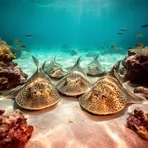
A group of sharks like nurse sharks and carpet sharks with flat, patterned bodies
Compounds
- Specialized
A group of sharks like nurse sharks and carpet sharks with flat, patterned bodies
Surface Forms
Morphology
Orectolobidae = Orectolobus (opaque) = Orectolobus + idae
Formed by adding the specialized zoological family suffix '-idae' to the genus name; this taxonomic formation is not a productive semantic derivation for general learners.
Etymology
Orectolobidae comes from the Greek name Orectolobus, built from parts meaning 'wide' and lobus meaning 'lobe' or 'flap'. So the name fits these sharks, which have broad, flat bodies and lobe-like fins or skin flaps that help them hide on the sea floor.

