
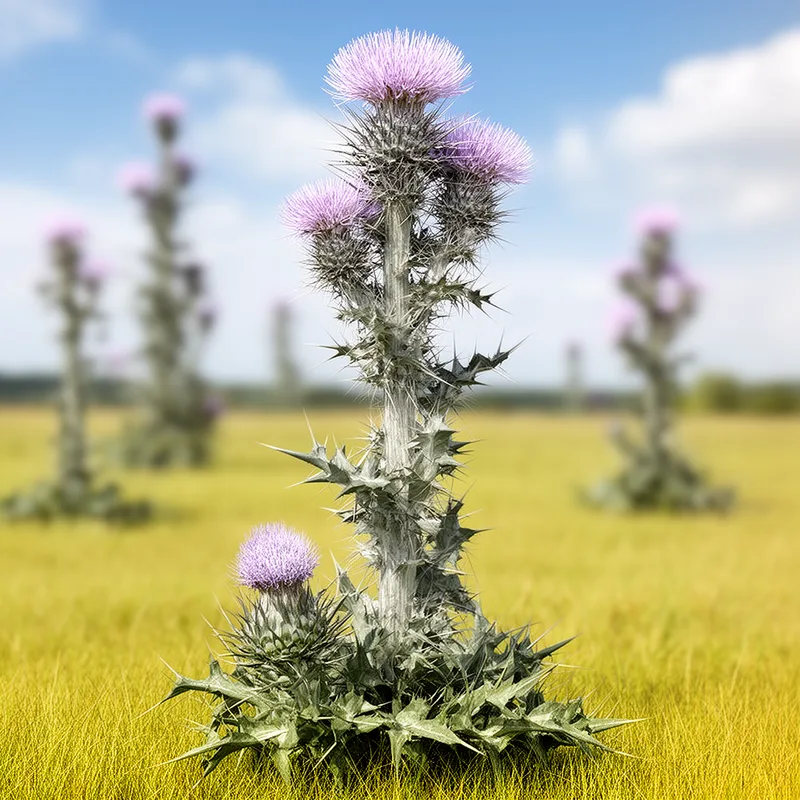
Onopordum acanthium
- noun
- Specialized
- The fields were dotted with the pale purple blooms of Onopordum acanthium in late summer.
Examples
-
Onopordum acanthium often grows over two meters tall in favorable conditions.
-
Gardeners sometimes plant Onopordum acanthium for its striking appearance, despite its prickly leaves.
-
The Onopordum acanthium is often found in fields.
-
Many gardeners dislike Onopordum acanthium for its invasive nature.
-
Onopordum acanthium is known for its tall stature and striking pale purple flowers.
-
In gardens, Onopordum acanthium can add an interesting texture with its white-hairy leaves.
-
The distinctive appearance of Onopordum acanthium makes it a popular choice among plant enthusiasts.
Synonyms

A tall plant with sharp spines and pale purple flowers that spreads quickly
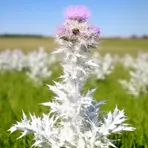
A large spiky plant with white fuzzy leaves and pale purple flowers

A tall thistle plant with white hairs and pale purple flowers
Surface Forms
Morphology
Onopordum + acanthium
This is a Latin scientific binomial (a taxonomic name) that functions as a proper noun for a specific thistle species rather than a compositional English phrase. Even if a learner knows 'Onopordum' as a thistle-like plant, the species epithet 'acanthium' is specialized (and here not defined), so a B1 learner would not reliably derive the full referential meaning from the constituents.
Etymology
Onopordum acanthium is a scientific name that may come from old Greek words describing the plant's thorns. The part acanthium comes from a Greek word for 'thorn', which fits this tall plant with prickly leaves and stems, so the name reminds you it is a large, thorny 'Scotch thistle'.

