
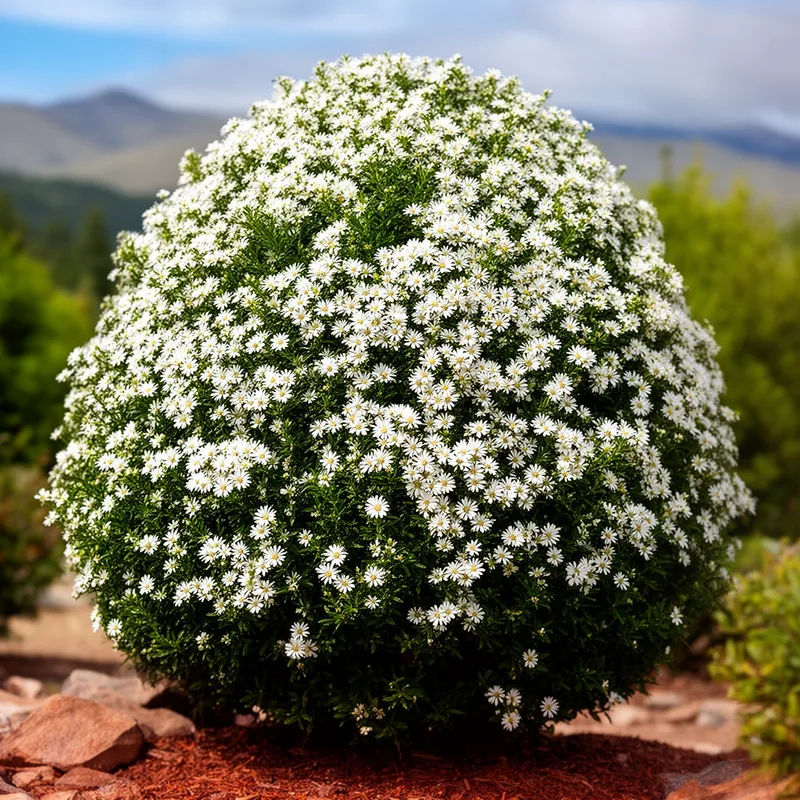
Olearia haastii
- noun
- Specialized
- Many gardeners prefer Olearia haastii for its hardiness and attractive scent.
Examples
-
The garden features several Olearia haastii plants blooming in late spring.
-
I love the smell of Olearia haastii flowers.
-
Botanists admired the dense foliage and flowers of Olearia haastii during their field study.
-
The Olearia haastii blooms beautifully in the spring.
-
Many gardeners prefer Olearia haastii for its hardiness and attractive scent.
-
The garden features several Olearia haastii plants blooming in late spring.
-
Botanists admired the dense foliage and flowers of Olearia haastii during their field study.
Synonyms

A bushy shrub from New Zealand with groups of fragrant white flowers
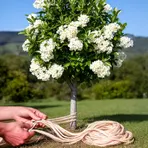
A small New Zealand tree with fragrant clusters of white flowers and bark used to make rope

A New Zealand tree with strong bark that people use to make cord and that has small white fragrant flowers
Surface Forms
Morphology
Olearia + haastii
This is a Linnaean binomial: knowing 'Olearia' (a genus of shrubs) lets a learner infer that the phrase names a kind of shrub, but 'haastii' is a non-lexical species epithet (not an English word) and does not contribute descriptive meaning. Because the genus signals category but the species name is simply an identifier, the overall meaning is only partially derivable from the parts.
Etymology
Olearia haastii is a scientific plant name with two parts. The first part, Olearia, groups it with similar plants, and the second part, haastii, honors a person named Haast who worked in New Zealand, so haastii shows the plant was 'named after' him.

