

Old World mistletoe
- noun
- UK
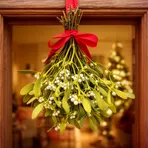
- The Old World mistletoe is known for its distinctive green leaves and waxy white berries, which are often used in Christmas decorations.
Examples
-
The berries of Old World mistletoe are toxic if ingested.
-
People often hang Old World mistletoe in their homes as part of Christmas celebrations.
-
In some cultures, Old World mistletoe symbolizes peace and goodwill.
-
Look at the Old World mistletoe!
-
We hung some Old World mistletoe in the doorway.
-
During the holidays, many couples kiss under the Old World mistletoe as a sign of affection.
-
In European tradition, hanging Old World mistletoe is believed to bring good luck and protect the home.
Synonyms
 40
4.1
40
4.1

A small green plant with white berries that people hang in doorways at Christmas
 1
9.9
1
9.9
An old word for a small green plant with white berries used at Christmas

A small plant that grows on other trees, known as the Christmas mistletoe
Surface Forms
Morphology
This is a straightforward modifier+noun composition: 'Old World' specifies geographic origin and 'mistletoe' names the plant, so a learner who knows 'old', 'world' and 'mistletoe' can infer it denotes mistletoe from the Old World (i.e. Europe/Asia/Africa). There is no idiomatic or metaphorical shift—meaning follows normal English compounding and origin-marking patterns.
Etymology
Old World mistletoe is a small green plant that grows on tree branches and stays green in winter, so people in Europe hung it in their homes at Christmas as a sign of life and 'goodwill'. One popular story says people would stand under the hanging mistletoe to show friendship or to kiss, which is why the plant is still linked with 'kissing' and holiday decoration today.